Skull Room

don't remember
being scared
there
in the skull room
where
i went to look for watering can
feed flowers on grandfather's grave
there
in the skull room
where
wooden cubbies cob-webbed
held single skulls
along wall vaulting fifteen-feet high
in wet alcove
side a centuries-old church
top a steep hill
with three cemetery rings concentric
but
my five years
could not
understand
the skull room
where
next day
i thought i ought
return
so walked
one mile at five years
along dirt road
alone
back
to the skull room

to look for a shovel
for grandfather's grave.

Mom’s Friend Roxanne

There is someone in my house who is not my mom. She looks like her. She smells a little like her. She likes the same jazz music as her. But she has it turned up too loud, and she’s naked. She dances around the foyer like leaves in the wind, and I want to show my mom this crazy woman, but I can’t find her.

I run to my room to get my camera, the one I got for Christmas. You have to wind back with your thumb until you hear a click, then you take your picture. I snap a photo and wait for the print. A few minutes later, the image of the crazy lady is finally complete. Her messy, sweaty hair is all over her face. Her skin is pinker than my mother’s.

I look everywhere for Mom, but she’s gone. The dancing woman must be my babysitter. I sneak past her into the kitchen and have ice cream even though it will spoil my dinner. But dinner never comes. When I wake up the next morning, I realize I fell asleep with my ice cream bowl in my bed. The melted cream dried crusty on my sheets.

“Hi, sweetie,” Mom says when I come downstairs for breakfast. The kitchen smells sweet. Mom looks pretty. Her hair is curled, and she has lipstick on. She has on dad’s old robe that she’s always wearing since he went to jail. “I made chocolate chip pancakes for breakfast. Do you want one or two?”

“Two, please.” Chocolate chip pancakes are my favorite. Mom doesn’t make them a lot, because too much sugar is bad for you. She plops two fluffy ones on my plate with a smile, and I smile back. She doesn’t mention that I finished all the ice cream.

We sit at the kitchen table, sitting opposite each other. I pour syrup over my pancakes, and a lot more comes out than I’m allowed to have. I look to see if mom noticed, but she’s drinking her coffee, staring at the wall.

“Mom.”

She jumps like I scared her. “Yes, sweetie?”

“I saw this crazy lady yesterday.”

“Where, outside?”

“No, in the foyer.”

I take my photo out of the pocket of my dinosaur robe and slide it across the table. Mom’s eyes widen, and she gasps, putting her hand over her mouth. She stares at the photo for a really long time. I wait for her to laugh, but by the time I finish my pancakes, she’s still staring. Finally, she clears her throat and gives me a smile that lasts less than a second.

“Get dressed, and I’ll drop you off to school, baby.”

It’s definitely a good day, because I normally walk to school. Dad used to drive me, but then he went to jail. Mom does a good job driving, too.

Mom talks on the phone while we drive. I sit in the backseat and look out the window. I see her look at me in the mirror, but I pretend I don’t see. She hates it when I listen to her conversations. It’s “nosy.”

“Caleb saw Roxanne last night,” she says, hushed. It’s hard to hear her over the sound of the radio. “A picture…Christmas camera…no. I swear! Yes… Well, I’m alone, y’know… mhm. I hear you. Yeah… who wouldn’t be? This is not why I called you!” she says louder. I think she says a curse word. She puts her phone down and turns the radio up.

Mom must be mad because she had to fire Roxanne. I’m sad Mom is upset, but I’m happy she’s leaving. So, I’m surprised when two days later, Roxanne is in the kitchen.

Music is playing again, too loud. I can’t concentrate on my homework. Roxanne is wearing one of my dad’s old jerseys and a pair of shorts I think are mine. She sways her hips back and forth while she stirs a boiling pot. The music has no words, and she’s singing in a language I can’t understand.

She sways and sways and sways till she’s facing me. Her face is puffy and red like she’s been crying, but she looks very happy. She drops the ladle and reaches her hands out to me when she sees me. “Caleb!”

It’s too late for me to run, and she pulls me close to her hot, moist body. I wince as she plants damp, soggy kisses on my face, and I wipe them with my hand right away. Roxanne doesn’t notice. Roxanne doesn’t notice anything.

“You look just like your daddy with your face all pinched like that. Dinner will be ready soon!” she shouts over the loud music. I groan and go back to my room. I give up on my homework and watch TV instead. Mom will have to write my teacher a note. It’s her fault for getting me a horrible babysitter who doesn’t do homework with me.

I watch TV until my eyes hurt. I don’t know what time it is, but I know it’s past dinnertime. My stomach is cramping. The music downstairs has stopped, but Roxanne never called me down for dinner. Or maybe I just didn’t hear.

The air downstairs is hot, and it hurts to breathe. It stings my eyes the closer and closer I get to the kitchen. I trip over something I can’t see and fall to my knees. Why didn’t Roxanne turn on the lights when it got dark? My eyes water, and I scream for my mom until my throat hurts.

I must’ve fallen asleep, because I woke up in my mother’s arms. She’s crying and kissing all over me. “I’m so sorry,” she says over and over. “I thought I turned the stove off. I’m so sorry.”

Why are you sorry? I want to ask, but my throat feels like it’s full of sand. It hurts to open my mouth. I need water. I need to tell her about Roxanne.

“The fire department is here,” my mom whispers quickly, like she’s in a rush. “They’re coming in to check on the oven. Why don’t you go up to your room? If you’re quiet, I’ll bring you some cookies and milk. But you have to be very, very quiet.”

I need milk now, and I haven’t even had dinner yet, but I’m too tired to speak. It feels like I’m walking in slow motion. Each step makes my head drum. When I get to my bed, I’m out like a light.

When I wake up, I realize I overslept for school. My night table is empty. Mom never brought my cookies and milk. I bury myself deep into my blankets so she won’t hear me cry.

There are two good things about September. The entire second grade is doing a play at school at the end of the month. The Wizard of Oz. I practice lines and get the part of the lion. It’s a lot to remember, so I practice in the mirror every day. My teacher gives me notes on how to look more expressive.

The second good thing is that Dad’s birthday is in September. September 12th. But I guess because he’s gone, we don’t do anything special on that day anymore. We can’t even call him because Mom said he lost his “privileges.” So, she just sleeps. She always sleeps. Every time I need something, she’s sleeping. It’s very annoying. Sometimes my dinner is left wrapped in foil on the kitchen table with a note. Sometimes there’s no dinner at all. On those days, I make my own food. I make sandwiches, or cereal, or put frozen pizza in the microwave. I’m growing up, becoming a big kid.

Mom doesn’t pick out my outfits anymore, either, so I’m dressing myself now. I like that she’s letting me be a grown-up, but sometimes homework, cooking, and practicing for the play are too much. I got a detention for missing three assignments in a week. The house stinks. The garbage is piling up too much for the lid to fit on it. I don’t know how to use the mop, so the floors are dirty and sticky.

There’s always something to do. I get home and make my afterschool snack. I tidy up and throw out the empty bottles that have been appearing all over the living room. I shower (no more baths, I’m too old now, I’ve decided), and skip homework because I really am too tired. I lock myself in my room at 9 o’clock every night because that’s when the loud music starts. That’s when Roxanne is here.

But today I must go downstairs because it’s the play. Even with being so sleepy lately, I haven’t stopped practicing. I’m the best actor in the whole grade. One day I’ll be famous.

I walk downstairs around six pm. It’s quiet, but all the lights are on. I pause at the bottom of the steps, listening. There’s no music. There’s nothing but the sound of the refrigerator and this low humming.

I slowly walk to the kitchen and realize the humming is actually snoring coming from Roxanne, slumped over the kitchen table. Her hair is all crazy as usual. She smells like chemicals and pee.

I move a chunk of hair out of her face, and her eyes flutter open. “Hey, baby,” she says, her voice sounding like she has a bunch of marshmallows in her mouth. “What’s that?”

I step out of her reach before she can touch my homemade lion costume. I glued orange construction paper to a white shirt to make it, and it’s very fragile. “Where’s mom?” I ask.

Roxanne looks confused. “I am your mom, baby.”

“No, you’re not. You’re Roxanne.”

Roxanne throws her head back and laughs loudly. There’s drool crusted on her chin, and the bathrobe she’s wearing is filthy. Dad’s robe. The one mom almost never takes off. Roxanne grabs a glass from the kitchen table that’s filled to the top with a juice that smells both sweet and sour.

She lunges forward quickly, pulling me to her by my arm. I shriek as some of the juice jumps out of the cup, spilling all over the front of my shirt. “When mommy drinks her special mommy drink, Roxanne comes out,” she giggles, her hot breath tickling my face. “Don’tyoulike mommy like this? Don’tyoulike mommy happy?”

“Get off me!” I scream. Warm tears burst out of my eyes, spilling down my cheeks. I squirm and wiggle until she lets go. “You ruined my costume! I hate you!”

Roxanne gasps, and her skin gets very red, like she’s about to explode. “You ungrateful brat! You have no idea how much I do for you! With no help! You ungrateful little—”

She lunges towards me again, her eyes sharp and angry, as if she wants to hurt me. I jump out of the way, and she crashes to the ground, her glass shattering against the floor in a million sharp pieces.

“Caleb!” Roxanne roars. I run out of the kitchen and through the front door into the night. Tears pour down my face; I can barely see. I want mommy home now. I want things to go back to how they used to be.

I don’t stop running until I get to school. My teacher is waiting in the lobby with all the other kids in the play. “Caleb!” she says when she sees me. “What happened to your costume?”

I try to explain Roxanne, her temper, and how much I miss my mom, but all that comes out is more tears, so heavy I can’t speak. My lungs are pounding, and I can hardly breathe. “It’s okay, it’s okay,” my teacher says. “I’ll take you backstage. We have an old costume you can wear.”

She quickly takes me to the room behind the auditorium and gives me a lion costume to change into. It’s too big and smells like an attic. When I’m done, I see her smelling my spoiled costume, frowning.

“I’m all ready, Mrs.,” I say.

“What’s this on your costume, Caleb?”

“Special mommy juice. Roxanne spilled it on me.”

“Roxanne?”

“She’s my mom’s friend. She’s always at our house.”

She pinches her lips together and puts the costume in a plastic bag. For a second, she seems upset, but then she turns to me and smiles. “You look great, Caleb. Break a leg!” I know she doesn’t actually want me to break my leg; she just wants me to have good luck, which I need. I don’t feel like a lion at all tonight. I feel like a sad, scared kitten.

I line up onstage with my classmates. I hear the principal of the school talking, and then with a whoosh, the curtain lifts. Bright white lights shine on us like stars. The audience cheers loudly. I look into the crowd and see rows and rows of parents, pointing at their children, smiling, and taking pictures. There are video cameras with red lights, balloons, and signs. The auditorium is full of lots and lots of people, except for one empty seat.

Everyone onstage smiles, putting on what my teacher calls their stage face. Not me. I can’t smile. I can’t stop looking at the empty chair.

My mom isn’t here. Dad is gone. Not even Roxanne, who I can’t seem to get rid of, has come to see my play.

No one cheers for me in the audience. No one at all.
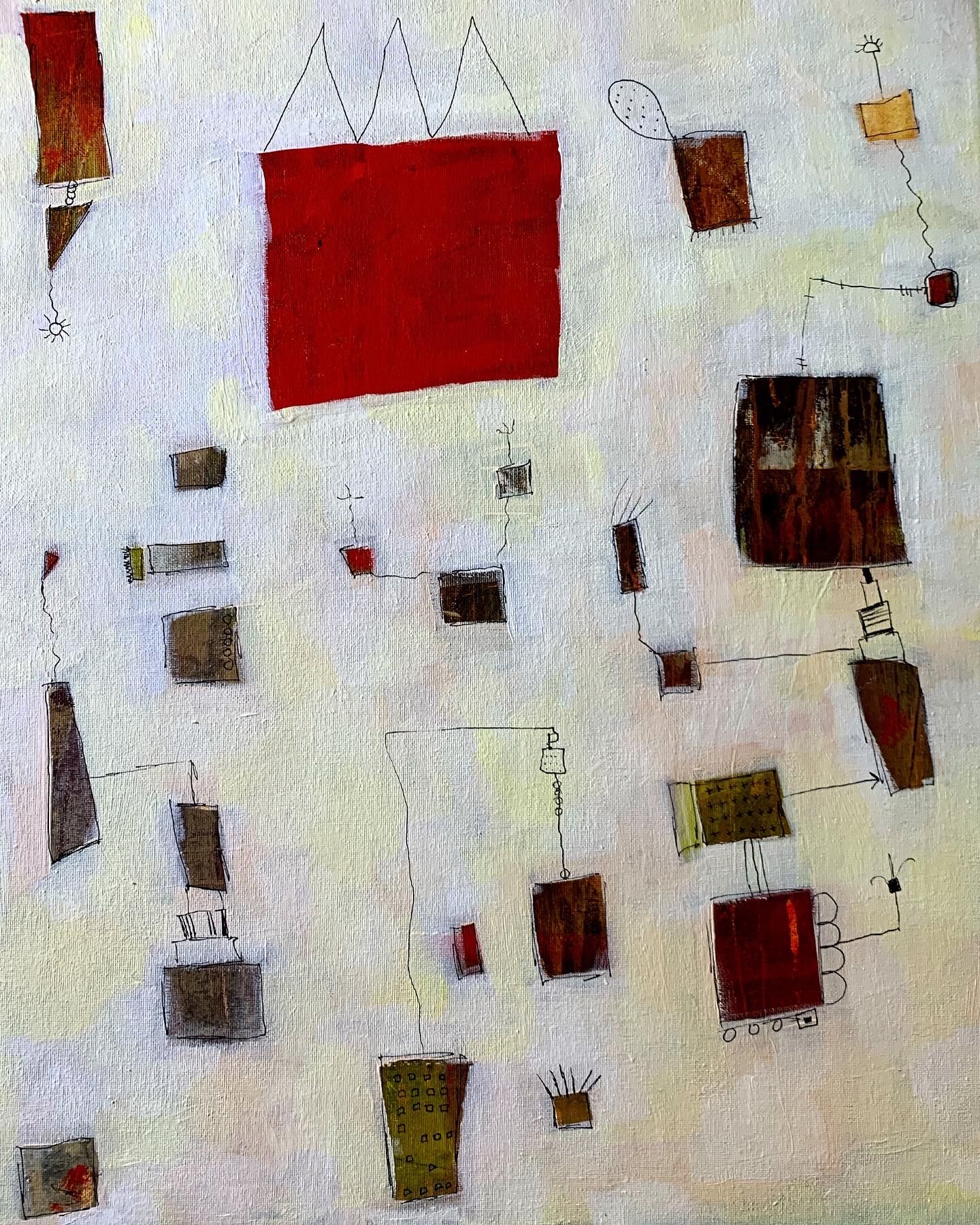
If My Sister Were a Painting

the colors would change with light: 
not as all paintings must,
but as a river suddenly flush
with wild jumping fish.

pixie cut girl dashing around naked
me shy and shocked
peppermint ice cream
pink cheeks

She would turn mildly
in a tar-crack driveway and mumble.
She would take my folded poem
in her bare white hand
and read it aloud, quickly,
as if to her self.

trapped together
sweaty gas station bathroom
tears slide down
they’ll leave without us
your eyes hang low
like a hound dog’s

She would laugh loudly,
the har har pitching out
of the artwork,
startling quiet onlookers.

you sneak in
take my cloisonne bracelet
the very gift you had given me
i ignore you for months cruelly
anger dripping down my throat
dirty honey

If my sister were a painting
I would side-eye
her cut-off shorts,
upturned mouth
and the movement of hand on hip,
- something of mine, invisible in that hand-
the elbow, a fine point.

i dare you
hot green peppers
again and more out of the jar
i goad you giddy
yes twenty
you swallow startled
and we laugh

Wide feline eyes look down on me,
while fingers reach out
striking the redhead of a match
against the slate museum wall.

Later I see the clever-shy details of your face:
you gently bite your lip, hold back a smile,
raise your eyebrows in expectation.
You make me melty cheesy toast in the little oven.

She sets my poem afire.
She dissolves through a camouflage
of dark background and
pin-stick oil spots.

You teach vulnerable children,
the cherishing smile in your voice;
You get married in your backyard
and we feed carrots to the horses
lingering at the back gate.

I watch the blue, the yellow
the orange-candy heat.
The canvas curls up,
ribbons in its frame.

When I talk about childhood misdemeanors,
you are silent, mysterious.

I leave the building, scorched fingertips.

Why Does Everything Happen In January?

I remember it was cold. The skies were a cool grey with that look of, “it might snow, it might not,” as I stood in front of the two-story, X-shaped building. I had been here several times before, visiting family and friends or going with my dad to take communion with fellow church members. The old two-story hospital, replaced in the late ‘90s by the shiny, off-white, eight-story Medical Center, still looked the same, down to the color of the brick. I opened the door and entered the familiar lobby. The high ceilings and large, two-story windows at the entrance of what used to be the waiting room were still there. The lobby was quiet and sterile, with a single receptionist at a desk that bore the name of one of the leading companies in the healthcare information technology industry. It was January 11, 2010, and I was there for the first day of my first job in the IT field. I was filled with nervous excitement. I was changing careers at (what I thought was a geriatric) 37 years old. Sitting in a cavernous space behind the main entrance of the building with multiple rows of grey fabric cubicles offset by a different shade of grey carpet, I began to meet my coworkers and learn about the job of supporting customers in the use of an application that our company developed to assist with the registration and billing of patients in a hospital setting.

During my time of work for the company, I experienced different life events, but the most significant event, to that point, came when we brought our son home at the end of 2019. My wife and I got married in 2009. We were both in our mid-to-late thirties. After about six or seven years of being unsuccessful at having children, doctors told us that we would most likely not be able to have children on our own. After careful consideration and prayer, we decided, in 2017, to consider adoption to grow our family. After waiting with an adoption agency for two years without being matched, we decided, in 2019, to consider fostering, and hopefully adopting a child from the foster care system. We started the foster care classes with AGAPE Nashville in mid-summer of 2019; at the end of summer, just a few days after we got approval from the state to be a foster home, our case worker reached out to us and told us that there was a child born in July who would most likely become adoptable very soon. She also told us they had us in mind for this child the entire time we went through our classes, but couldn’t say anything to us. After changing direction and being open to being foster parents, we were able to bring our son home just a few months after he had been born.

I took parental leave from work starting on January 1, 2020, to bond with our new addition. This new life, with his adorable little fat rolls, covered everything he touched with his slobber. It was a joyous time bonding with the chubby, smiling, “drool machine” who was learning to hold his head up; was fascinated by the lights and sounds of his toys; and loved to annoy Linus, an aging brindle colored Beagle-Bassett mix we had adopted from a rescue. These were times of laughter, sleepless nights, and dirty diapers. Spoons transformed into cargo planes that delivered food as they were on their final approach. I knew everything would change when I returned to work. And boy, how everything did change.

I had only been back at work for a week when management announced, “Everyone is going to work from home for two weeks”. COVID-19 had stopped the world, putting up a giant, “Sorry, We’re Closed” sign in flashing neon. Part of me was happy to work from home since my wife was still on maternity leave and we had our son at home. However, I soon learned this was the beginning of my house arrest. For three months, I had laughed and played with the chubby, smiling “drool machine” in the upstairs Bonus Room. Now, I was confined within the four beige walls of the adjacent room. I missed seeing my co-workers and interacting with them face-to-face. I have always been a person who craves personal interaction. But this was only for two weeks, right?  And it provided more time to spend with our son, whose adoption we were able to finalize the week before Thanksgiving, 2020.

It was a mild day on January 4, 2021, when our company CEO made the announcement, via email, to all employees. The company was closing all offices worldwide, and everyone would work from home going forward. There goes the face-to-face interaction with my coworkers over the low walls of our cubicles covered in grey fabric. There goes the decompression time during a 30-45-minute drive home (depending on traffic), listening to talk radio or my favorite songs. I was stuck at home even after the world turned on the “We’re Open” sign. My wife returned to her office, and our son entered preschool. The house was quiet; the room’s beige walls got closer daily. The only sounds were of the robotic vacuum we called Smithers, breaking the silence every Monday, Wednesday, and Friday, as it tried to consume a child’s sock and iPhone charging cables. I started to lose excitement about this job.

I took some days off work in January of 2023. My dad was in and out of the hospital. He had dealt with Chronic Obstructive Pulmonary Disorder for quite a while after years of smoking. He had given up cigarettes several years prior. But after you smoke for nearly fifty years, well, it takes a toll. Beginning on New Year’s Day, he had been admitted to (the now not-so-shiny and off-white) Medical Center with fluid build-up around his lungs and heart. They drew off the fluid and sent him home. A week later, he was back in the hospital. His mother died from congestive heart failure, so I had seen this routine before. He was sent home on palliative care. The third and final time he was admitted, I drove him to the hospital along with my mother. It was Martin Luther King, Jr. holiday, so I was already off work. The overcrowded waiting room of the ER was stifling. People were sitting wherever they could find a spot. My mom and I took turns going back to see my dad. She returned to the waiting room, so I went to the triage area to see my dad. In the cold triage room, he told me, “Once I get outta here, I ain’t comin’ back”. One thing about my dad: He always kept his promises. He was sent home to hospice. Two days later, he passed away peacefully, surrounded by his family, in his favorite sagging, brown recliner that sat in front of the large picture window of the house he had shared with my mother since 1965 (the same house I was raised in). They were married for 71 years. Dad died on January 27, 2023, at the age of 92. We laid him in the ground on January 31 as snow fell softly from the grey sky.  I remember it was cold.

I would say that the fallout from COVID-19 that created my imaginary prison made me start to dislike my job, but it was the death of my father that started making me consider what else I would want to do instead. While helping plan my dad’s funeral and meeting with the people at the funeral home, I thought that might be a job that I would like to do. My friends have said I have great empathy and a soothing demeanor. But I never thought about quitting my job to pursue a different career. Not at my age. Who would hire a 51-year-old with no experience as a funeral director?  But then, sometimes, God will give you a little nudge. Sometimes, He pushes you off the cliff.

The morning of January 24, 2025, started just like any other. I begrudgingly turned on the company laptop in the beige, upstairs compartment that served as my home office. Two accent lamps combined their efforts to provide the warmest and most welcoming light possible from a soft-white LED bulb. I went down to the kitchen to get some coffee, allowing the computer time to boot up, then returned with my cup of hot Death Wish Espresso Roast in hand. I sat down in my high-backed office chair with the scuffed arms from when I thought my desk was taller than it is, and logged in. Not long after, a message appears in Microsoft Teams,  “Do you have a minute?”  That’s never a good start to a message from your manager.

When my manager’s face appeared on the screen, she was visibly upset. I tried to add some levity to what I knew was coming. “I guess this is a bad time to ask for a raise”, I joked. She managed a smile. The company was downsizing our team; several of us would lose our jobs. That was my last day working for the company where I had worked for the past fifteen years. Ironically, I was having a new computer desk delivered to my house that day, a fact that, when stated, caused my manager to begin crying again. I turned off my computer, sat quietly, finished my cup of Death Wish coffee, and headed downstairs.

Many events shaping my life’s journey happen in January. I don’t know why, unless it’s because I don’t make resolutions each year, so the year decides to do it for me. I spent time thinking about what I wanted to do next. My wife and I told people I was looking for a new job. Most of the leads I got were for IT jobs, which makes sense after working in IT for fifteen years. None appealed to me, knowing how unhappy I had become in that line of work. Even my friends working in IT are dissatisfied and wish to quit their jobs. After some deep consideration and people continuing to send me IT job leads, I reached a decision. I told my wife, “I no longer want to work in IT. I want to be a funeral director.”  That night, she helped me look up everything you had to do to work in that industry. I talked to the funeral directors that I know at my church about it. I got my license to sell life insurance because (ironically enough) you can’t sell a pre-need funeral plan without a license to sell life insurance (I know, right?). We found a mortuary college in Nashville that’s been there since 1946, attended by almost every funeral director in Tennessee. I began the admissions process and was accepted for Fall 2025 enrollment.

So, now I find myself at a (not so geriatric) 53 years old; back in school and pursuing a career change. One that will provide the satisfaction of helping to bring comfort to families in a time of grief and the ability to help them honor and celebrate the life of their loved ones. Had it not been for the death of my father and losing a job I didn’t like, both events happening in January, I probably wouldn’t be making this change. And you probably wouldn’t be reading about it.

Why does everything happen in January?  The reality is that it doesn’t. My wife and I got married in June. We moved to our new home in April. Our son was born in July. My time working from home began in March. Our dog, Linus, passed away in September. Why, then, do the January moments seem to be more impactful?  Is it because life is returning to the ordinary after a time of thankfulness and celebration with family and friends during the holidays?  Is it because it’s winter?  Life, for the most part, is dormant in the winter. There is not as much light. The skies are grey, and the wind is bitter. It’s cold. I suppose the same can be said of an individual at times.

Perhaps, I will consider winter a necessary time of preparation for what is to come instead of a time of cold and bitter darkness. Spring comes, and thawing occurs. New growth emerges that will eventually be in full bloom. Flowers will display their colorful blossoms, adding their beauty to the landscape. Trees will grow outward and upward as they continue to strengthen and mature. Eventually, summer will provide bright sunshine and fresh air.  This, in time, leads to inevitable change and culminates in the harvest of autumn. I suppose the same can be said of an individual at times.

I will experience different moments that provide direction, and in some cases, redirection, at varying times. I must pay close attention to all of them, not just the ones that happen in January, as they are all life-shaping. I cannot determine or predict when things will happen. I’m okay if they come in January, but I would prefer if they occurred in July, maybe at the beach, when it’s not so cold.

Mom Was (Not) a Handicap Lady

Mom wasn’t made to be sick. She refused to stay at home, refused adaptive clothing, and refused to acknowledge when places weren’t accessible. She dawned chunky necklaces and oversized hoops (and when she did I’d say, the bigger the O the bigger the Ho, Mom), which I’m sure she laughed about when I wasn’t looking. She wore furry and frilled tops, and pants with so many buttons they were nearly impossible for a caregiver to configure. But they did it anyway.

She made those caregivers take her to TJ Maxx to buy ballgowns for black-tie weddings, and whatever other fashionable things called her name, even if they came with literal bells and whistles. I’ve never seen a woman wear so many formal outfits from a wheelchair while also dying. Being put together, head to toe, was non-negotiable, even if she was headed to get a pedicure. She would have despised what I wore to class in college: an oversized shirt that drooped past my knees. 

Showing up in the world as an aging pageant queen was her prerogative, and she mastered it, even if a disease was taking over her body. She typed out every detail of the outfit she wanted, down to the lipstick color. If my siblings, the caregivers, or I grabbed the Fushia Fusion instead of the Berry Rumba, she wasted precious energy typing the correction. I wanted to snap, “No one will notice, Mom.”

 But she would.

Mom expected the rest of us to perform alongside her as if it required no effort at all. Early on, when she first lost her ability to walk, she insisted on sitting on her walker, letting us roll her through places backwards, as if she could stand up and walk at any moment. Three years into the disease, she couldn’t move her legs, but she didn’t want others to know that.

Three years is the typical life expectancy after an ALS diagnosis, though my mother added twelve more. Fifteen years of witnessing her fight her body for her children, until she finally decided we’d be okay and she could leave us.

Some people wondered whether it had really been ALS and not another neurodegenerative disease, because no one lives that long with ALS, or so they’d say. But my father remembers February 2004 like it was yesterday. I’m sure Mom arrived at the doctor’s appointment in gold earrings with a matching gold necklace and her iconic gold bangles. 

         After the neurologist delivered the news, calling it Lou Gehrig’s disease, he glanced at the clock and said he had another appointment to scoot off to. Before leaving, he offered one suggestion: buy a wheelchair now with an oxygen tank attachment, because that would save them money in the future. Insurance would only cover one.

The doctor wished them well, and my parents never saw him again. It took years for my mother to succumb to a wheelchair, because where I came from, no prominent socialite used such a vessel for transportation, not even 90 year old grandmothers. Wheelchairs signaled weakness, and we were not weak.          

When she finally accepted that a wheelchair was the only acceptable form of transportation, life became easier in some ways. But the places she loved the most like her friends’ homes rarely had ramps, just muscular family friends willing to hoist her over wide front stoops with huge smiles. We barely make our home more accessible, so why would they?

I dreaded pulling up to these non handicap accessible venues. Mom wanted us to have a united front, smiling while heaving her out of the car to her wheelchair without sounding like we were at the gym. Once she was situated with the right amount of space between her back and the backrest and footplates reattached, the first obstacle stared us down: walkways lined with stepping stones and loose gravel. They were the hardest because every uneven slab poised an opportunity to catch the wheel of the wheelchair and catapult her forward.

Everyone offered to help, but we knew Mom wanted us to do it, not calling attention. She never asked us to stop bending over backwards so she could live life “normally,” so we forged ahead. My father lived with the motto, happy wife, happy life, and it trickled down to me. Happy mom, happy life.

So on went the chunky jewelry, the TJ Maxx runs, and the weekly nail appointments. I can’t imagine my daughters balancing that kind of devotion in the midst of my denial.

Pushing down frustration felt like holding a beach ball underwater. My godmother knew this, and always greeted me with a libation, because she could see deep down how much I was struggling with the constant acting. She’d wave her hands by my eyeballs so they would stop sweating. If she was hosting and couldn’t get to me right away, she’d summon my godsisters to take over and acknowledge my tears.

As I got older, everything we did started to feel unnecessary and harder to justify. Why couldn’t we be at home laughing over home videos of Beau and me running around with diapers on our heads wearing Mom’s bras? Those were the glimmers I desperately wanted. But when Mom didn’t give them, my siblings and I created them, like when we found alternative usages to the ramp in the garage. Once Mom went to bed, my little brother and his friends would signal it was time to meet up in the garage and create some high school ruckus. We threw makeshift skateboarding competitions like the show Jackass. My favorite memory of this was after my rehearsal dinner. We started going down the ramp headfirst, riding it like we were paddling out on surfboards, and then I stopped myself, because hobbling down the aisle the next day really would have irked my mother.  

I stopped acting during the summer between my first and second years of college. It happened after I drove her to the antique store to shop for a chest of drawers and end tables, despite having an already furnished bedroom from the previous tenant’s hand me downs. I didn’t need, or want, mahogany bedside tables, but I knew Mom wanted me to have some, so out of guilt I drove her alone to yet another inaccessible place.

I should have known how the trip would end: with my huffing and puffing just like leaving antique stores did as a little girl. The parking lot was gravel and the aisles were too narrow. After using every ounce of muscle I had to pull her out of the passenger seat and into her wheelchair that never unfolded easily, I finally had her ready, hoping it would bring her joy to discover a timeless, vintage piece for my first apartment. I just wanted her to feel included in the part of my life she couldn’t access. Even if that came as a burden to me.

But we didn’t find joy in faking normalcy this time. Instead, I parked her near the front and rushed through the store alone, without her keen eye to distinguish trash from treasure. We left empty-handed, and I decided that would be my last solo outing with her. I’m fairly certain we drove home with the trunk cocked open and the wheelchair jutting out, because I couldn’t collapse it properly to get the hatch closed. If we were going today, I’d put my foot down and say to Ikea we go, with ramps, elevators, wide aisles, and welcoming staff. We could have laughed at home while I tried to assemble it all and complained that half the screws seemed optional. But I wasn’t ready to let the facade go back then. It’s what I thought Mom wanted.

When the caregivers took over bringing her everywhere, especially to church, I stopped going with her. Wheeling her through the vestibule had become a spectacle, a weekly public display of Mom’s strength. She attended services while enduring kidney stones, which I have to believe she did for her own joy, not for the audience. Conversely, if I have a bad dream the night before, I skip church. Showing up amid the pain isn’t really my style.

But I am not my unshakably strong mother. And my father wasn’t either. Three years and one month after the diagnosis, Dad took off his wedding ring. When you think you’re on a three year timeline, you can go as hard as you can.

But no one accounts for overtime.

A Madness Shared By Two

The Week After Burial

            Day 1. I’m cold.

            Day 2. Waking and sleeping. Medicine. Sleep like death. Not close enough. I wonder things. Where did you leave the spare set of keys? I never needed to know this before.

            Day 3. They keep bringing food, I keep saying “Thanks,” even though I know by 3 AM the lasagna will be vomit and toilet water swirling down down down the pipes and my throat will

burn.

            Day 4. What was the last thing you saw? Was I the life that flashed in front of your eyes?

Are you here now, are you anywhere now, did you love me through the worst of it, and if I could say one last thing to you, have one last moment of truth from you, would I ask you if you fucked Amy from accounting?

            Day 5. Your brother wants the X-Files collection. You hate your brother. He cried at the funeral though and anyway, I guess you can’t hate him now. Only past tense for you. “Hated” resolves it. He can have it.

            Day 6. The room smells like decomposition. It makes me feel closer to you. What would you regret if you were here to do it? You have to tell me because you’re dead and dead things can’t lie. I don’t make the rules.

            Day 7. Laughter. Cruel and unusual. I must be angry now. More medicine. Sleep like death. Closer. Time always passes.

Some Months Later, In Little Bursts of Time

            Sometimes I hear your voice from the other room. I know that sounds crazy. Isn’t that a funny phrase? “I know that sounds crazy.” As if I need to justify myself to you, the one who makes me crazy by talking to me from the kitchen, three months from when your mother refused to meet my eyes after they lowered you into the ground. Anyway, when that happens it scares me, so please stop. When I’m ready, I’ll come to you. I remember our promise.

                                                            ___________________

            Couples holding hands feel like a personal affront. How could they not know? I pass a pair of them on the sidewalk before turning into the pizza place you didn’t like. A man with dark curly hair hands me the one-piece-of-pizza-heavy paper plate. He’s good-looking, like Brando in a dirty t-shirt good-looking. I hate him. My stomach churns with self-disgust. I sit in one of three empty booths and let the cheese burn the roof of my mouth, the hot bite landing in my gut like a rock. I can’t help it, I glance back toward Marlon, whose attention is on his phone. Probably in deep conversation with some starlet lost in the wrong decade.

            He might have thought I was pretty once. Now I might as well be a ghost.

                                                            _____________________

            I’ve walked past the gate a hundred times now. The first time was terrible. It’s bleak- the rusted metal, the screech I’m sure it would make if I pried it open. It took me weeks to go back again after that. Weeks of rotting in our bed that became my bed that I wish was yours instead.

            These days I circle the block for hours at a time, always coming back to the gate, pausing and gazing my female gaze beyond the bars. There’s nothing there. Not yet. Sometimes I get stuck in time, pacing back-and-forth-and-back-and-forth-and-back-and-forth. My behavior might elicit strange looks if this were a different part of town.

            Tonight I finally touch the gate – let my fingers slip through and feel the air on the other side.

            I’m scared of you. Do you know that?

                                                            ____________________

            My phone has been dead for awhile now. No more messages. It’s peaceful this way, though it crossed my mind once that I must be jobless by now. That’s funny. I still answer to knocks at the door, for concerned family with well-wishes, to keep them at bay. They mostly mind their business. I think they perceive me as Grief and Grief should be left alone. Fine by me.          There are no knocks tonight, and I don’t expect any. I hear the sound of you running the shower but you’re not and you haven’t and you won’t. Yet… laying in bed, I smell your just-washed skin. I almost feel the heat from your body next to me. The feeling surrounds me, petrifies me, convinces me. Yes, okay.

            The room is awash in blue-gray twilight. It’s that time of the day when there is no fear of death because the heaviness of life is unbearable. My body feels like it’s trapped underwater but I move anyway. This time at least. I’m on my hands and knees scouring the floor under the bed. Well, it’s here somewhere. We should have cleaned this out before you died because I’ll never do it now.

            There it is, against the far wall, just behind the twisted underwear leftover from a night you ripped them from my body. Or maybe they’re just from an overflowing pile of dirty laundry. I stretch my arms out fully under the bed, my ear pressed against my shoulder, reaching reaching, muscles pulling. Fingertips brush an old shoebox and I nudge it towards me.

            I open it slowly as if I’m unsure of what’s inside, but I’m not. Just a little plastic bag of psychosis.

                                                          _______________________

            My legs are heavy on this walk. The night is darker, as if the whole town has turned it’s eyes away out of respect. The thud thud of my feet on the sidewalk softens when I hit the grass in front of the gate. I can’t look up yet- I just can’t. Instead, I breathe in the familiar smell of rust, feel the give of the ground. A little autumn breeze touches my hair and some wind chimes somewhere. Deep breaths. Swallow.

            I toss the empty plastic bag onto the ground and watch it dance away on the wind. It feels good to do a bad thing because, fuck, it doesn’t matter at all.

            My fingers wrap around the bars, feeling the old flaky texture rub against my skin and I push. The gate gives against my weight and screeches in a tantrum. I slip inside.

            In a sense, the garden is dying – the flowers planted by a loving hand are long withered, no one to tend to them, to keep them going, to pretend they have a purpose. But it’s also as alive as it ever was. Just not in a way that draws human visitors. Good riddance, really. The overgrowth and weeds, the insects who can survive and thrive are plenty alive. Even the rust that eats at the metal – what else can eat but something living? Death comes for everything – but it’s not death that has to stay here in the mess. What lives takes over what dies. What lives consumes it, covers it, eats it up, and survives from it. We forget the dead things. But not you. I won’t let it happen to you.

            I walk towards the back of the garden where the darkness deepens, and my eyes adjust quickly -not much light in my life these days – to take in a bench with chipped paint, grass growing up around the legs, a silent observer of the cycle of life and death, not totally untouched itself. I feel afraid. That you’ll come, that you won’t. That I’ll never leave this dark place again, that I will.

            Nevertheless – here I am. I’m making no moves, but I’m somehow in motion, toward the bench, where I sit and wait. Days, or hours, swirl around me. Colors and sounds mix and melt and fade, and my thoughts pass by until I think nothing, want nothing, feel nothing anymore. And then, there you are.

            There you really are. Not a shadow or sound of you but your full form, wearing your favorite black sweatshirt and blue jeans, smiling at me, alive as I am. Which is to say, just barely. I keep my gaze straight ahead as you sit down next to me. The weight of the bench changes. You’re right here. You’re right fucking here. My breath quickens and my heart speeds up. I clench and unclench my hands as my palms become clammy. So much life coursing through me- I don’t like this, I don’t know what to do, what should I do? My entire body is reacting to yours, the way it did the first time we touched, but this is different. This might be wrong. I hear you sigh, and I know your eyes are on me, but I can’t look at you. If I look, we’re in this. Whatever this is, however you’re here.

            Then I feel your thigh gently press against mine- that slight pressure of human touch that’s been missing for months. The little spot that warms while the rest of me stays cold. You don’t speak. I don’t think I could handle it if you did, so maybe it’s a relief. The lump in my throat is unbearable and I gasp out a noise like a cry. I don’t recognize the sound. As tears spill out I turn my head with effort, and look you in the eyes. They’re blurry behind the wetness in my own, but they are there and they are yours and they are drunk with love for me.

                                                            ___________________

            I’ve come back every night for weeks, expecting each time for this to be a mirage, but it never is. You’re always here. The street outside the gate is gaining it’s own little garden of plastic bags. I imagine this veil between us is more intrusive than we want to believe. Often it’s raining as we sit together, and that’s when I most notice how my senses have transformed. My aliveness is a stinging reminder of our separation. I smell the grass, the rotting flowers. I taste the air on my tongue. You don’t seem to notice any of it at all.

            Sometimes I reach out and let my fingers graze yours. Mine are freezing cold but yours are just there. You don’t notice this either. We haven’t spoken. Maybe you can’t. For me, there’s too much that words could break. Sometimes as I sit with you for these hours on end, my stomach rumbles- yours never does. Your body makes no sounds at all. I started bringing apples so I could sit with you longer. Maybe I hope you’ll ask for a bite. No, of course not.

            What good is this reunion when you have no touch, no taste, no words? I can’t help but come back because despite it all, I know you’re there. You always see me and the look you give is always the same. Longing.

                                                            ___________________

            Tonight, my body feels strange as I leave my apartment, on my way to you. My limbs are almost concrete, I’m moving so slowly. I don’t remember the last time I’ve seen sunlight- I’ve become nocturnal. I grab a bruising apple and my magic bag.

            This time as we sit together, I have a compulsion to lay my head on your shoulder. My muscles are tired enough that the fear of rejection- or worse- doesn’t stop me for once. The fabric of your sweatshirt is soft and almost warm. Your shoulder is solid. If you would only lean into me too, it might all feel so real. At least you don’t disappear, which relieves me of my worst fears. I close my eyes and take you in. Hours roll on and I don’t even notice the hunger this time. And then, to my surprise, I feel something light on the back of my head. It’s your fingers, and they’re running through my hair.       

                                                            ___________________

            This is the last time I’ll see you. We both know this somehow, and so you reach out to me and hold my hand. My temptation to break the silence is unbearable but my sense of dread is unassailable. I’m so tired – my bones feel hollow, disappearing. Before I came here tonight, I looked in the mirror for the first time in ages, compelled by a strange need to confirm that I still exist, I guess. The knocks at the door ended awhile ago now. Everyone’s gotten the message and left me alone. That’s how it should be. But now that I’ve become the sort of person who’s only companion is the ghost of my dead lover, I have to wonder.

            Turns out I’m still here, mostly. But my hair is falling out. My lips are dry and white, and you could drown in the deep dark circles under my eyes. Yet here we sit, and you’re still gazing at me with reverence and a glint of something else. Not love anymore. There’s a searchlight behind your eyes- something seeing past me. I understand. I know how it will go. Okay.

            I lay back on your shoulder and let you touch me gently. Your breath comes in deep sweeping continuous motion, and I try to match the pattern. But my lungs burn and my own breath is made of quick and shallow bursts.

            Here we are at the end. How do you feel? You’re feeling things now, I guess. What’s it like? I don’t remember.

            Lifting my hand to my mouth is a herculean effort. I use every bit of energy left inside me, to bite my apple one last time. Not from hunger – that’s long been gone – but as a final confirmation. It’s ash in my mouth. I hand the fruit to you and you take it with ease. You touch your tongue to my bite. My vision is fading, but I hear your sharp intake of breath. I imagine the way your eyes must glow.

            I wonder if you thought I wouldn’t notice when they stopped seeing me – when they only saw the tiny bit of life within me- that life that was so small, so diminishing. How did you find it at all? How did you know it was something to steal? Anyway, I did notice. I knew the game. It’s just that I agreed to play and lose a long time ago.
            I sink down until I’m sprawled over your lap. Your body is warm, warm, warm. Your hands run up and down my back in a smooth sliding motion. You smell my hair, you kiss my head. As my limbs stiffen, everything turns to dust inside me. Returns to dust, returns. From dust you came, from dust you shall… But not you, my love. Not you. As you pull away from me, my body hits the hard bench and loses the warmth of yours, although I don’t notice it much. I see your silhouette as it walks toward the gate. It is the last beautiful thing I will ever see.

            And you will live forever.