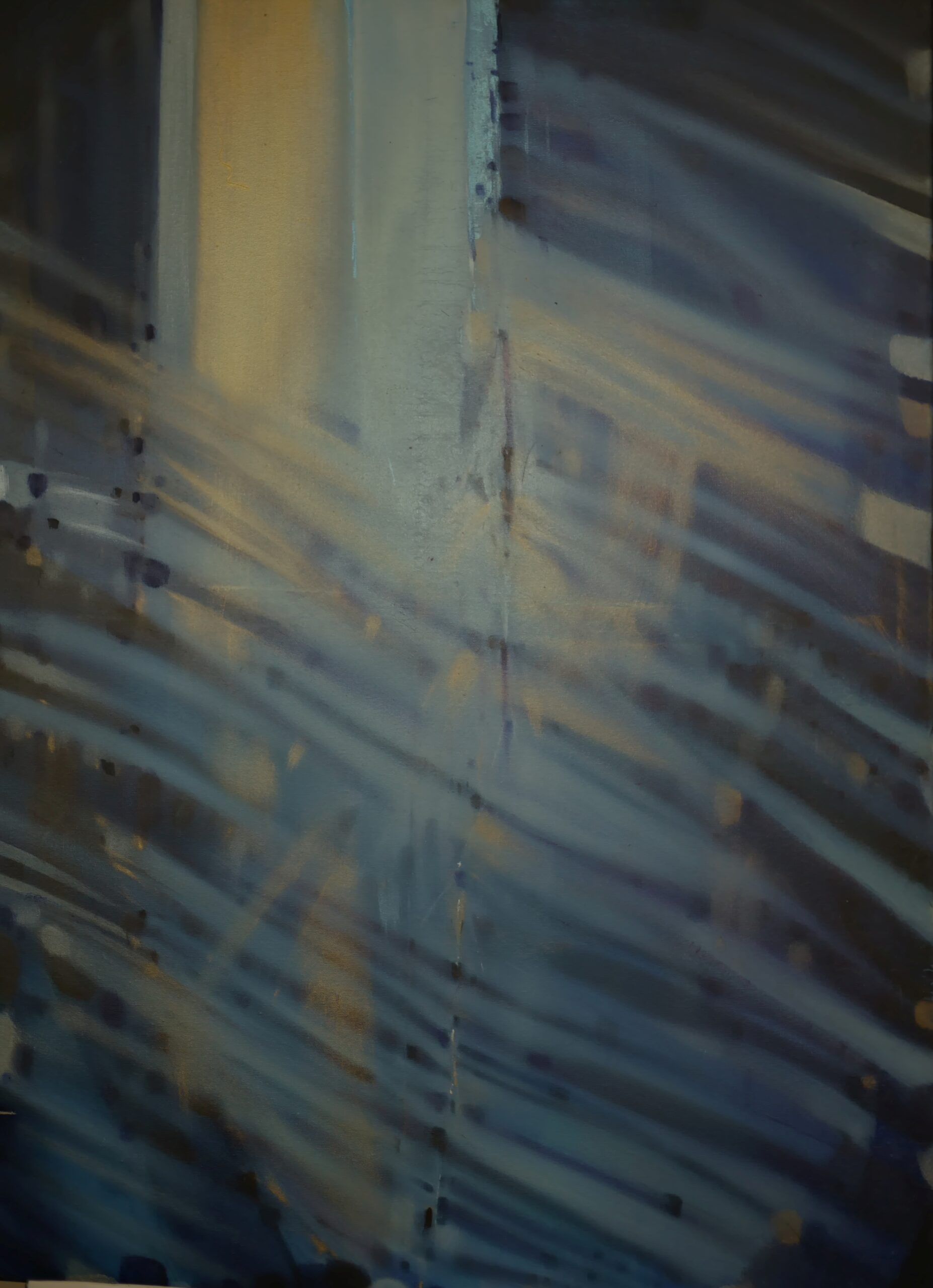
Knowing, Not Not-Knowing
There are no instructions for the slow, seismic shift of growing up between languages, only the gradual ache of realizing you are a creature of halves, a face that answers to two names while the mirror offers back a sentence forever cut short.
You moult and shift, a flicker passing through the cracks of translation, yet people rarely see the leaving; they mistake your silence for forgetting and your flutter for indecision, never realizing you are already inhabitng the “in-between.”
Most chances arrive in two tongues, usually a beat too late to choose, leaving you to rehearse a private freedom in Spanglish—an elective exile that feels simultaneously like an escape and a return. You begin to gather the symptoms of this displacement like uncollated notes: memory becomes a border crossing and belonging feels like a passport that was never stamped, and looking back, you realize that your stillness was merely survival, though it doesn’t quiet the panic that rises when both flags finally hang still in the wind.
The answer, if it exists, refuses to speak; instead, it burns with a quiet, hungry heat that flickers beneath thick accents and those phrases that refuse to be carried across the line.
It is a soft light surviving its own contradictions, the rhythm of something alive in two directions at once; a constant, rhythmic ping-pong of sí and yes, of ni modo and maybe, the echo of a word chasing its own shadow. To speak is to never quite know which tongue holds the absolute truth, to write dusk and then crepúsculo and realize they describe two entirely different heavens.
Some days are measured only by the wait between customs lines, like a farmer gauging the soil between his strawberries and the distant fence, realizing that the moon above him is already bilingual and that there is a profound, silent peace in finally refusing to choose; in letting the land translate itself.
They climb the ridge together, careful not to disturb the desert hush, understanding now that curiosity is a path with two names and that the valleys behind them are destined to blur.
At the summit, they find no finality, only a mesquite tree spreading wide, its leaves speaking the shared vernacular of sky and soil.
The children followed those leaves once, each step a word in a language they hadn’t yet mastered, every path a return to a place they had never actually left, their history threading their tongues like a long, shared breath. This was the secret they stumbled upon: that awe, when properly placed, makes the body invisible to sorrow.
I watch them now through the slant of memory, letting their eyes become mine until I hear the mountains speaking in a multi-hearted code, a miracle repeated so often it begins to sound like a lullaby. Nature is borderless, yes, but it is also painstakingly specific, and we find we can belong in more than one place at once. There are other names for this—dichos, refranes, prayers whispered into the wind; but sometimes it is enough simply to walk and listen to the oldest trees murmuring between breaths.
The rain knows where to fall, favoring the late afternoons and perfuming the mesquite before the sky clears, and when the sun rises sharp and blue, you see how tender the city has become. It is not broken, merely translated, as if the sky left its mouthprint across the rooftops and the mind, astonished, keeps layering more, realizing that knowing in two languages makes the imagination thicker, wilder, and infinitely more resilient.
Which leaves us with the only question that remains: Is it a kind of blessing, this constant knowing without ever needing to know that we know?