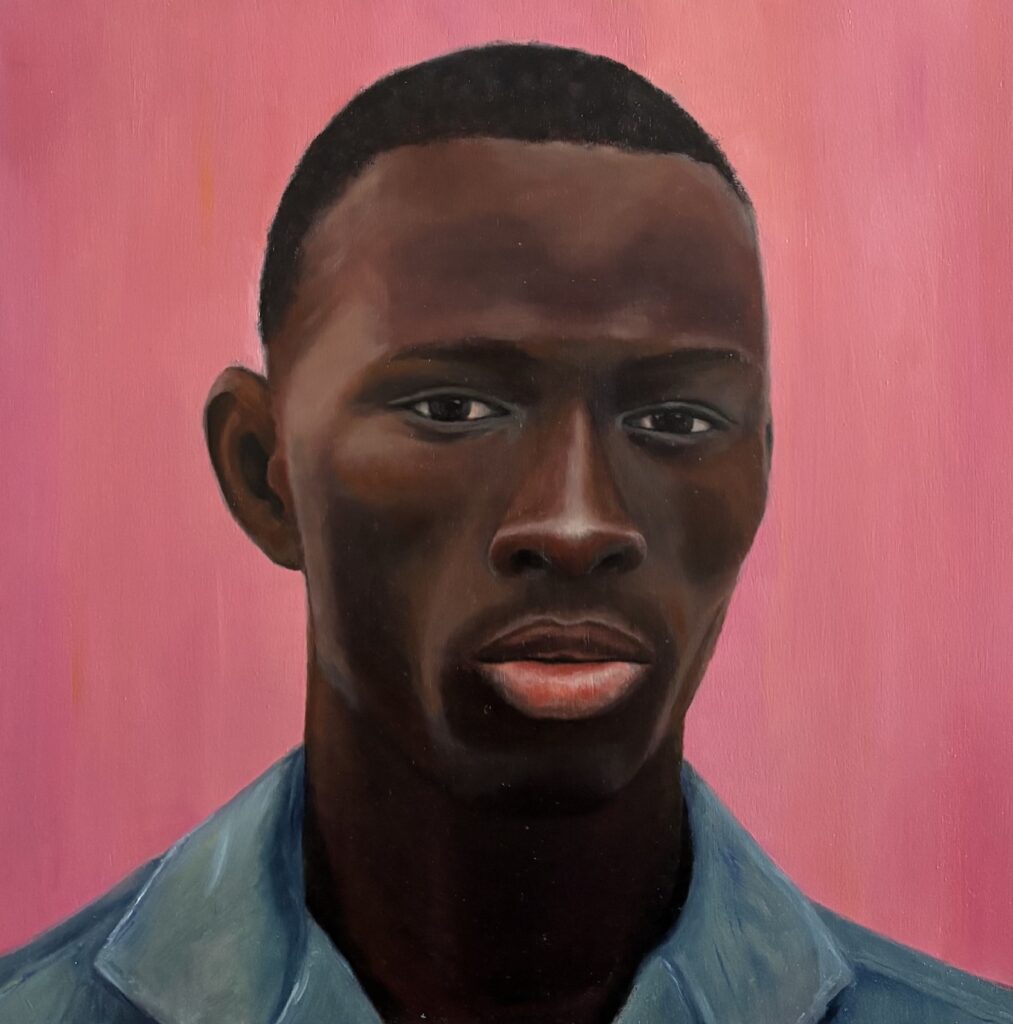
Portrait in Pink

       This
is the life I wanted
               all that time, the one that held itself

away from me while I kept choosing
lovely cups and creatures, circus-like
               and therefore real

        in all their shining. A man at the meeting
says at least today I’m not doing anything
               that’s killing me – I think, apart from living –

yes, this is the life
I wanted - an instant
        newness,

          livable at last, and sometimes
lived. And even when its shape is distant, this life feels closer
               than the walk home from the shift

telling myself not to stop at the corner
or do anything that might turn
               myself out for the rest of the night–

         walking to the end of the road
I would face myself
              in the direction

of the house
where I would go inside
         where I would not be at the end

        of a park’s shadow, looking up at a botched moon
and down at a baggie that had appeared in my palm
             thinking the two were the same.
Heinz squinted southward through the haze across the water. Jagged mountaintops stood silhouetted in the distance, maybe a dozen kilometers away.
So that’s what Switzerland looks like.
He’d known since he was a schoolboy that Switzerland was full of mountains, but he never thought he would have the opportunity to actually see them for himself, much less walk among them. The peaks stood much larger and higher than he had imagined. Books and magazines hadn’t done justice to the vista. He’d wanted to see and touch these mountains since he first saw them depicted in an encyclopedia at the library when he was a boy. His hand went to his breast pocket to touch the ferry ticket.
He had come a long way in his seventy-five years to this spring morning in 2011. The walk from the rail station in Friedrichshafen to the waterfront of Lake Constance, der Bodensee, took less than ten minutes, and the exercise kept him warm in the spring morning’s chilly air. The last of the snow had finally melted around this part of the country as May progressed. Back home in Erfurt, the shady spots still harbored crusty remnants of last winter’s snow.
This trip of a lifetime almost didn’t happen. Heinz’s son had picked up the telephone and made the reservations for the ferry and a hotel room in Rapperswil on the eastern edge of Lake Zurich. “There, Dad. You have a ride and a room reserved. After wishing for so many years, you’re going to Switzerland.”
Heinz stepped onto the terrace of the Gastätte Bodensee cafe on the Uferpromenade, the wide walking space on the north shore of the lake. Green umbrellas stood over the ten tables on the terrace, and six people sat outside, taking in a late breakfast and reading newspapers. At one table a lone woman with gray hair sat at a small table near the railing. The aroma of coffee mixed with the sound of clinking flatware floated in the air, and Heinz took a seat at an empty table near the railing, where he could see more of the lake. The enameled wrought iron chair felt chilly. A white tablecloth with placemats covered the iron table, and the fabric rippled in the faint breeze that carried the scent of the lake. He slid his suitcase, not much more than an overnight bag, under the table. He had never needed much, and on the rare occasions for travel, he always traveled light.
Heinz had made an early start this morning, his son seeing him off at the rail station in Biberach, and the ride through Ravensburg, arriving in Friedrichshafen. All told, the trip took less than an hour. Georg was right. After journeying some 350 kilometers southwest from Erfurt to Biberach, why not take the trip to the border? Georg had known of his dreams of Switzerland for years. His son had never visited the lake nor crossed the border, despite living this close for years.
Heinz thought of Alexei, the man who had occupied the bench next to his all of those years in the optical works, grinding and polishing lenses and prisms. They were friends, not close like brothers, yet still friends who took the occasional beer or coffee together. Almost the same age, Alexei came into the world three months after Heinz, and he departed this world a scant two months ago, collapsing from a heart attack after climbing aboard a streetcar. Heinz had been one of less than a half dozen who attended the funeral. The notion that the end could be nearing for him as well had reawakened old thoughts of Switzerland.
A waitress stepped up to the table. Heinz greeted her with a smile and ordered a kännchen of coffee with a kaiser roll. He had already eaten breakfast, but the soft boiled egg and cheese at his son’s house had long since digested.
The waitress brought Heinz his coffee and roll. She paused after pouring his first cup from the small kännchen pot. “Anything else, sir?”
“No thank you.” Heinz shook his head. “This is good.”
The waitress nodded with a smile and turned away. The lone woman rose from the nearby table, coffee cup and saucer in her hand, and she stepped into the space where the waitress had stood.
“Excuse me, may I join you?”
Heinz pulled the adjacent chair out for her and gestured to it. “Please.” After spending a week with Georg’s family, he knew that he spent too much time alone.
Her pewter-colored hair moved with the weak breeze. A barrette kept it clamped to a ponytail that fell just below the shoulders of her pale green jacket. The lines in her face told Heinz that she had to be at least in her sixties. The years had gracefully settled on her slim frame, and she must be one of those who stayed active. Heinz always walked twice a day and harbored a secret pride that he still wore the same size clothes since his thirties.
“I couldn’t help but notice your accent.” The woman’s face pinkened as she settled into the chair, perching like a bird ready to take flight. She set her cup down on the table. “My dead husband came from Berlin.” She spoke the dialect of this region, Swabian, but likely watered it down for Heinz’s benefit.
Heinz smiled at her. He had hardly exchanged six words with anybody since stepping off the train, and it was good to have company. Back in Erfurt, he experienced days without conversation, and often the silence was too much to bear. “I imagine he talked too loud.” He winked and sipped coffee. “All Berliners talk too loud.”
She chuckled. “Even his last words.”
“I’m sorry for your loss.” He set his cup down.
“Thank you. It’s been several years.” She pressed her hands into her lap. “Where are you from?”
“Breslau.”
Her eyes widened as if she had seen a ghost. “You’re Silesian.”
Heinz nodded, flattered that she recognized his birthplace. He didn’t know why he revealed that when he had spent the last sixty-five years in Erfurt. Silesia, like West Prussia, Pomerania, and East Prussia all vanished in 1945. Breslau took on the name Wroclaw as those territories became the western portion of today’s Poland. The Russians and the Poles had enforced the takeover in 1945 with heavy handed vengeance. Heinz’s family had twenty minutes notice to pack their bags and leave.
“Actually I’ve spent most of my life in Erfurt.” He sipped coffee. “It’s where the Russians resettled my family.”
“Of course.” She nodded, her voice quiet and her eyes examining.
He extended his right hand. “Heinz Maurer.”
She shook his hand. “Susanne Klein. What brings you here, so far from home?”
Heinz pointed a finger toward the lake and mountains looming behind the southern shore. “That.”
She followed his finger to peer across the water and frowned, not fully understanding.
“Switzerland.” He lowered his hand. “I’ve never seen it. After all those years living in the East, Switzerland seemed more of an idea than a real place.” He turned to look at her. “I was visiting my son in Biberach, and with the border so close, why not?”
Susanne nodded. “We see a lot of Swiss coming into Friedrichshafen these days. With the franc exchanging so high against the Euro, everybody does their shopping here. They’re very friendly, and of course the merchants love to see them.”
“Now that I’ve seen Switzerland. I can go now.” He nodded at the lake and began to rise from his seat.
“What?” Her eyes widened.
“I’m kidding.” Heinz settled into his chair and patted his breast pocket. “I bought ferry tickets to go over today.” He picked up the kaiser roll that came with his coffee and tore it in half. He offered a piece to her. “Help me eat this. I have a tight schedule.” The brochure in his bag listed the departure times, ferries departing each hour, and he wanted to take the first boat over. His son Georg was right to force the issue, and like Alexei, Heinz didn’t know when the end would come. Take the opportunity now to fulfill an old dream.
“Thank you.” She took the bread and nibbled at it.
Heinz dunked the corner of his piece in his coffee and bit off a piece as he watched the far shore of the lake. During all of those years in the East, the rules, the Party, Heinz had fantasized of taking Georg and escaping to Switzerland. In Switzerland, a man could live free and do as he pleased.
He pointed across the lake. “This view reminds me of another when I was a boy, when Dad would take us to the Baltic on vacation. We’d stare across the estuary at Travemünde, at the West.” Heinz dropped his hand to the table and gazed across the lake.
Susanne joined him, looking at Switzerland. “I’ve never seen the Baltic.”
“You’re not missing much. Acres and acres of mud flats, and the wind is so cold.” He looked at her. “My son tells me that it gets pretty warm around here in the summer.”
She nodded. “But the lake is still icy, even in August. You’ll have to come back and see for yourself.”
Heinz weighed the logistics of a return trip. Everything was more expensive in the West. He’d been frugal with his pension, and it kept him comfortable in Erfurt. Maybe he had been too comfortable and had forgotten his old dreams.
“You son lives in Biberach?” She put a hand on his arm.
“Yes.” He nodded and smiled, stealing a glance at her hand. Its weight and warmth made him feel good, wanted. Heinz couldn’t remember the last time he experienced a friendly touch. He edged closer to her, but not so close as to scare her away. “A very charming town, very clean, and very Catholic.”
Susanne tilted her head, much the way a dog will when encountering something unusual.
“We never went to church much in the old days, not exactly encouraged by the Party.” He shrugged. “The few times we went: Christmas and Easter, we went to the Lutheran church.”
“Being Silesian.”
“And living in Erfurt.” Heinz shrugged again. “Georg and his wife showed me the church in Biberach. It’s in the middle of the town square.” He turned to face Susanne. “On the outside, it looks rather drab, weatherbeaten dark stone, maybe a couple of gargoyles, almost boring.” He held up a finger. “But once you get inside – wow. The stained glass windows, and all the gilded statues, and the frescoes on the wall. You’d think it was a Roman basilica or something.” He nodded and reached for his coffee. “Sure impressed me.” He set his cup down. “I never saw churches like that in the East, and I didn’t know what to think when Georg and Uta told me that they had joined. That was right before they took me to Sunday mass.”
A smile creased Susanne’s cheeks, and he liked the way her smile reached her eyes. “And you didn’t know when you were supposed to stand, sit, or kneel.” She sipped her coffee.
“Good thing my son wanted me to feel welcome.” Heinz nodded. “He kept telling me what to do and when.”
“I visited a Catholic mass with a girlfriend once.” Susanne set her coffee cup down. “I almost died of embarrassment, standing when everybody else kneeled and not knowing what to do with my hands with the – ” She searched for the word.
“Genuflecting?” Heinz reached for the coffee kännchen pot.
“Yes, that’s it.” Her eyes brightened in recognition.
“I was never comfortable with ceremony, and my daughter in-law has pictures of Pope Benedict hanging in the living room and kitchen.” He nodded. “Gives me the creeps.”
“Why?” Susanne’s eyebrows rose.
“Reminds me too much of the old days, when people always had portraits of the Party Chairman in their houses and everywhere: Ulbrecht, then Hohnecker. Even Krushchev and Brezhnev.” He rolled his eyes. “At least the pictures of Stalin came down in a hurry.”
“I guess you don’t hang any pictures on your walls at home?” She patted his arm.
“Just my son and his family.” His arm tingled pleasantly where her hand had been. “Here, take a warm-up.” He poured coffee into her cup.
“Leave some for yourself.” Her eyes met his. “It’s your kännchen.”
Heinz emptied the kännchen into his cup and set it down. “There. Lord knows, coffee is cheap enough, and I can order more.” He looked again across the lake.
“Why is Switzerland so important to you?” She sipped coffee and waited for him to answer.
“Switzerland is freedom. A place where a man could be what he wanted, where he could do and say as he wished without having to worry about the Stasi.” Heinz looked down into his coffee cup.
“You had run-ins with the Stasi?” She watched him and waited to catch his eye.
“Not like you think.” He shook his head. “I remember going to the market, and for the third week in a row, they still had no eggs. I remembered griping about how the latest Five Year Plan didn’t seem to cover having enough goddamn eggs for breakfast. That’s when I felt a hand on my shoulder.” He also remembered the man in the adjacent apartment disappearing in the middle of the night. The wife and two children left behind scurried furtively in and out to work, to school, and to the market, like mice running along the baseboards, until they disappeared a week later.
“You were arrested?”
“No, nothing as serious as that.” He waved her words away. “A man dressed a lot better than me told me to shut my stinking mouth if I knew what was good for me.”
“Stasi?”
Heinz shrugged. “Maybe. At least a Party member. Either way, he was waiting in the same line as me for eggs that weren’t there. I had enough sense to shut up, not let my mouth put me in jail. I had a son to raise.” He sipped coffee. “I believed that the people in Switzerland never had to wait in line for eggs. They could get them anytime they wanted.” Now that his son was raised and doing very well, what would Heinz do next? When there’s nobody left to take care of, is it freedom or uselessness?
She nodded. “Erhard told me that it was always hard to find ordinary things at the market.”
Heinz chuckled. “We were always short of something or another. If it wasn’t eggs, it was something else.” He smiled at her. “I imagine your husband had some tales to tell you.”
She smiled back. “There was the year of the shoes.”
“Ah, the shoes.” He smiled at the familiar story.
“You know?” She tilted her head.
“You tell me the story as your husband told you.” Heinz leaned back in his chair.
“The stores had an abundance of shoes, more than anybody could wear, but no meat or butter.” She shrugged. “Erhard said that if he could figure out a way to eat shoes, he would have bought plenty.”
Heinz nodded and remembered. Things were so very different in the old days. He lived through the year of the shoes that she described, as well as the season of no eggs, no meat, the time of too many shirts and no flour in the stores. Now, he could buy anything he wanted, or things he never wanted, because the stores now had plenty. He rested his chin in his hand and glanced at Switzerland from across the water. Things had changed quite a lot since his younger days, when he and Charlotte first married and moved into the apartment. Soon enough, she had grown dissatisfied with the shortages at the markets, then later, dissatisfied with Heinz and his station in life.
“Penny for your thoughts.” She touched his shoulder, fingers leaving a warm impression that he wanted more of.
“Wondering about my ex-wife.” He turned to face her and shook his head. “She ridiculed me for liking Switzerland and called me a fool.” He grasped his chin. “Over forty years ago. The officer and party member she left me for must have found himself very suddenly unemployed with the reunification.” He grinned. “Cosmic justice, I guess. She wanted to ride the man’s coattails to the top, and as I remember, a lot of those party muckety-mucks ended up driving cabs and running newspaper kiosks for a living.”
“My Erhard thought they all should have gone to jail instead.” Susanne finished her coffee. “He escaped to the West in 1964.”
Heinz felt impressed. “How did he get out?”
“A tunnel. They had several in those days. One of the first things he did after escaping to the West was enlisting in the Bundeswehr. That’s how we met.”
“You were in Berlin?” Heinz knit his brow, trying to follow her story.
“No, no.” She waved her hands. “I need to get things in order. He enlisted in the Bundeswehr, and they sent him to Sigmaringen for training.” She gestured to the north with her left hand. “I grew up there, and that’s where we met.”
“How did you end up in Friedrichshafen?” Heinz rested his chin on his hand and watched her face. Her blue eyes seemed to reflect the color of the lake, and he liked that. He knew that the ferry would be leaving soon, and he should hurry. This woman didn’t talk or carry herself like the housewives and widows in his old neighborhood, and he wanted to learn more about her. She held herself straight and tall, her smiling face and ruddy skin radiated sunny optimism instead of complaining, and he wanted to hear more of what she had to say. He could catch a ride on the ferry’s second departure, and it ran every hour. His tickets were good for all day.
“Erhard liked being near water, and after he retired from the Army, we settled here.”
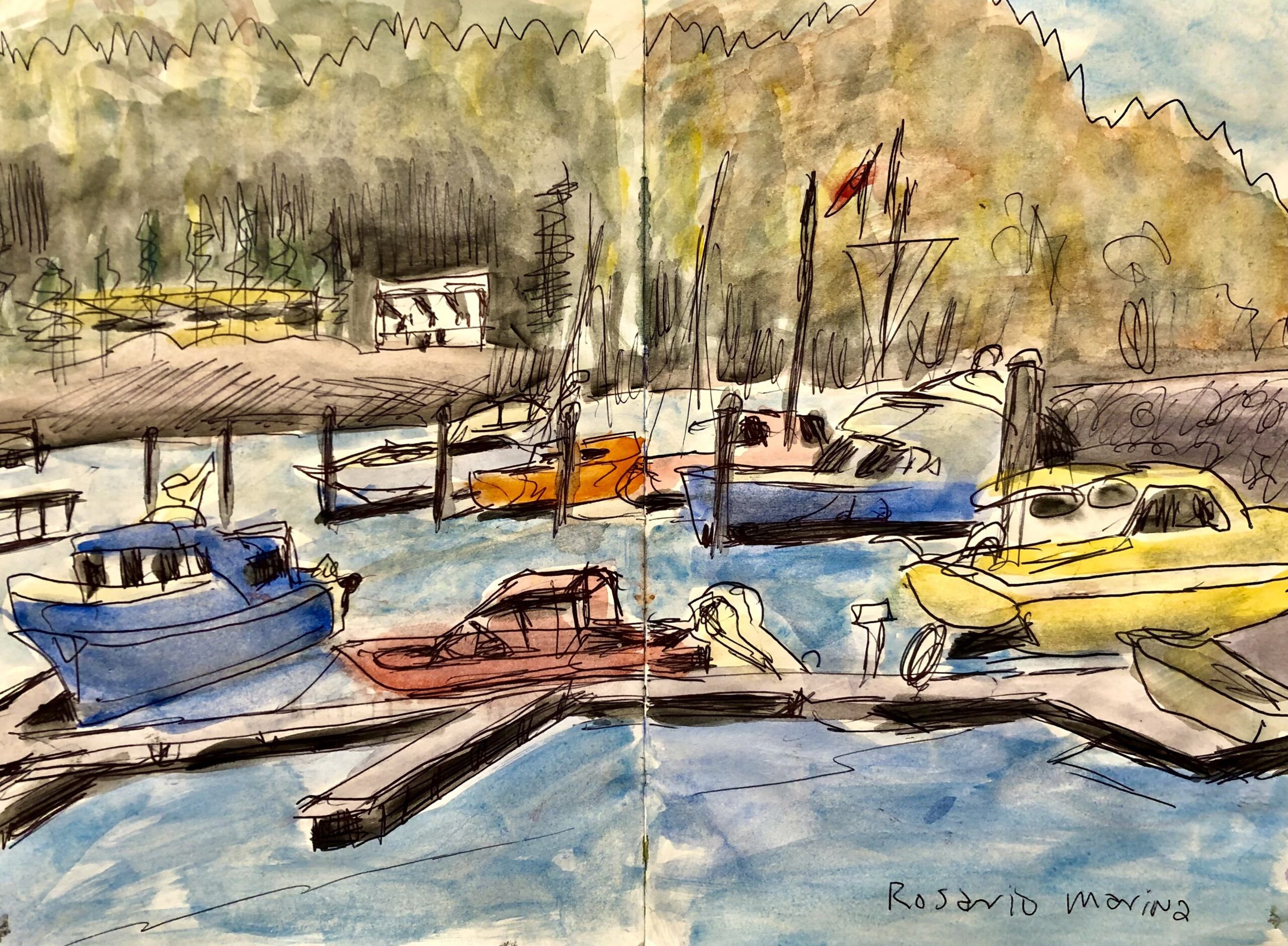
“A wise choice.” Heinz looked up and down the waterfront. A forest of masts and sails rose from a nearby marina, and more people walked the sidewalks and promenade as the sun warmed the air. “I spent my Army days guarding the border.” He rolled his eyes. “A colossal waste of time.”
“Which border?”
“The NVA posted me and half my school friends straight south of Erfurt. We spent most of our duty time admiring the trees in Bavaria.”
“You didn’t have anybody try to escape to the West in your sector?” She touched his arm.
He patted her hand and wanted her to keep it there. “Thank God no.” Not when he was on duty. “Our sector was very wide open and not very tempting. We’d have arguments in the barracks when we were off duty, about being able to shoot fellow Germans if the West attacked. I’m not sure I could, although as a soldier, it would have been my duty. Shooting German civilians…” He shook his head. “I couldn’t do that, and I wasn’t the only one who felt that way.” He smiled. “But we could tell from those arguments in the barracks who was going to be a Party member and get promoted to sergeant.”
Heinz remembered the one morning when the sergeant had ordered him and two others to remove a body from the wire, and he decided to keep this story to himself. Two men had tried to escape in the hours before dawn. After the guards had shot the one with the wire cutters, the other surrendered. The captain decided to wait until daylight to remove the corpse.
“I’m so glad those Cold War days are gone.” She squeezed his arm. “Aren’t you?”
“It’s been twenty years, and most days I’ve completely forgotten. On the train out of Erfurt, you can’t see any signs of the old border between Thüringen and Bavaria any more. I spent two years out there, guarding that border, and now it’s all gone.” He grinned. “If it weren’t for old guys like me remembering, it’s almost as if it never happened.” He thought back to pulling the body off of the barbed wire, the gaping exit wounds in the dead man’s chest. It did happen, and old guys like him couldn’t forget, even when they wanted to.
“My Erhard used to say the same kinds of things. You would have liked him.” Susanne settled back into her chair.
Heinz signaled the waitress, then turned to Susanne. “I would have liked to have bought him a beer and talk about the old days. Instead, I’ll buy his widow a coffee.”
The waitress stepped to the table. “Yes?”
“More coffee, please,” Heinz said. “Have you any pretzels?”
“Oh, yes. The bakery sent plenty this morning.” She gathered up the empty coffee cups.
“Excellent. We’ll take two.”
The waitress nodded and left.
“You don’t have to buy me anything.” Susanne’s cheeks creased.
Heinz liked the way the laugh lines deepened in her face when she smiled. “It’s my treat. The coffee here is very good, a lot better than my daughter in-law’s.” He winked. A motorboat crossed the lake from right to left as he looked at the water. The buzz of its engine faded as the boat grew distant. “I like it here.”
“Where are you going to visit in Switzerland?”
Heinz rested his chin on his hand. “I’m not completely sure. I thought I’d see St Gallen, because it’s not too far, likely Zurich. It depends on how far my money takes me.”
“Zurich is just another big city. I’d suggest you try the smaller towns along the lake.”
“You’ve been there?” He looked her in the eye.
“Of course. It’s just a ferry ride away.” She held out her hands. “I’ve visited plenty of times.”
He took her right hand in his. “Then advise me, Frau Klein, where should I go?” Her fingers felt warm against his palm, alive and comfortable.
She glanced at their intertwined hands, then met his eyes. “First of all, Heinz, call me Sanna.” She addressed him in the familiar, her voice soft and low. “I’m, Frau Klein only to the kids in the neighborhood.”
“Done.” He squeezed her hand. “I’m a lot older than those kids and ought to know better.” He felt her hand squeeze back and not let go. The warmth of her skin against his brought a sense of comfort that he hadn’t had since raising Georg and before times grew bad with Lotte.
The waitress returned with another kännchen of coffee, two cups, and two soft pretzels. Heinz pulled out his wallet and paid the bill, rounding up the sum to the nearest Euro as a tip.
“You’re the first person I’ve seen who takes pretzels with coffee.” She lifted a pretzel and sniffed. “They smell good.”
“Blame it on the Mangelstaat. Heinz took his pretzel and bit off a chunk. He washed it down with coffee. “We never had enough sugar or fresh fruit for sweet pastries, so I learned to make do.” He eyed the morning sun’s position. “And it’s still too early for a beer.”
Susanne sipped coffee. “I like the combination.” She paused to glance at the pretzel in her hand, then looked him in the eye. “It’s different, the saltiness and the coffee. I’m not sure how to describe the flavor.”
“Tastes like breakfast in Erfurt.” Heinz tore another piece off of his pretzel and chewed. “Back in the day.” The too-large chunk of pretzel had formed a starchy lump in his mouth, just like in Erfurt. Heinz worked at it with his tongue, hoping to not dislodge his upper dentures. He hated it when that happened, but back then, it was the best he could do for breakfast. He hated himself in the moment for ordering such foolishness when he knew he could eat better in the West, and making a fool of himself in front of this charming woman. Those days were long gone, and it was plain foolishness to visit those miserly times. Heinz willed a smile to his face, not wanting to break the spell he and Sanna had, and washed the starchy lump down with a gulp of coffee.
“What’s it like in Erfurt?” she asked. “I’ve never been in the East, no closer than a trip to West Berlin back in the 80s.”
Heinz shrugged. “It’s just an old town with a lot of old folks like me living there.” He ran a quick inventory of his neighbors through his mind. The youngest was in his fifties.
“No children?” She cocked an eyebrow.
“Of course there’s children there, just not as many as before, so it seems.” Heinz shrugged, thinking. It had been a long time since he last saw children playing on the sidewalk, and those were a neighbor’s grandchildren on a visit for the holidays. “A lot of the younger people moved to the West, like my son Georg.” he nodded at her. “Better work, a chance at a better future.”
“Naturally. Who wouldn’t want to make a better life for his children?” She tore a piece off her pretzel and chewed.
“And how many children do you have?” Heinz raised his coffee cup to his lips.
“Two daughters. Ulrike lives in Sigmaringen with her husband Harold, and Liesl is in Stuttgart.”
“Grandchildren?” He took a second sip of coffee.
“Just one, Ulrike and Harold’s son. Thomas will turn ten this summer.” She sipped coffee. “And you?”
“Two. Gaby and Toby, and they’re both teenagers.” He rolled his eyes. “Just you wait until Thomas reaches thirteen.”
She chuckled. “Can’t be any worse than when our kids were teenagers.”
“The teenagers in Switzerland are much better behaved.” He sipped coffee and looked at her. “Got to be.”
“Oh?” Her cheeks dimpled and wrinkled again as she smiled.
“Of course. Everything’s better in Switzerland.” He looked across the lake. “After sixty-five years in that shithole in the East, Switzerland looks very good.”
She pulled back, as if she had been slapped.
“I’m sorry.” He put his hand on her knee and shook his head. It had been a long time since he last felt happy or satisfied with retirement in Erfurt, and the long pent-up words had simply spilled from his mouth. He liked this woman and didn’t want to burden her with his troubles. “Erfurt’s a dying town. Nobody but us old timers left, and what we remember isn’t always happy.”
She took his hand. “We all have regrets, things we could have done better, if we’d only known.”
He squeezed her hand. “Thank you for understanding.” Being a widow, she must have experienced plenty of her own troubles.
She reached out with her free hand to touch his cheek. “You must have had it very hard in the East.”
“Hard enough.” It had been decades since the last time a woman touched his face. It felt good and reminded him just how alive he was. After Lotte left, he spent his time raising Georg and working. Somehow, that had never left any room for dating or a social life beyond commiserating with the other parents in the neighborhood. “I’m glad to be a free man.” He patted his pocket, where the ferry ticket lay. “I can cross the border any time I want.” He wanted to get on the ferry, but he didn’t want to lose this moment with Sanna.
“And you won’t need a tunnel like my Erhard.” She offered a smile.
“But I’ll still need my passport.” He smiled back. I’ve heard that the Swiss are very orderly.
“And they won’t ask to see it, because the Swiss are very friendly.” She squeezed his hand. “You’ll have a grand time seeing the sights.”
He nodded agreement and considered inviting her to join him. But they had just met. He wanted to know her better and wasn’t sure how to accomplish that.
“And this is something you’ve wanted to do for a long time, so enjoy yourself. Tell your son what he’s been missing.” She shook her head. “Living all those years in Biberach and never once heading down this way.” She clucked her tongue.
Heinz finished his coffee. “I think I missed the first boat.”
She glanced at her watch. “The next ferry leaves in an hour. Did you exchange your Euros for francs?”
“Naw.” He shook his head. “I thought I’d do that after crossing the border.
“Let me take you to my bank. The exchange rate there is better than what you’d get over the border. They see the tourists coming and just fleece them.”
Heinz reached for his bag and rose. “I’m lucky to have this expert advice from a local.”
Sanna waved his words away. “You’re a thrifty man who appreciates a good bargain. You didn’t work all those years just to throw your money away.” She took his arm and nodded to Friedrichstrasse.
Heinz stood a little taller than usual as she led him past the rail station and north on Riedleparkstrasse toward her bank. Lotte once took his arm like this when they walked, but that didn’t last long. Sanna had a subtle way of showing when to turn and which way to go, not towing or steering him like a schoolboy, and he liked that. The last time he walked the city with a good woman on his arm, he was a just a young man.
He wondered what made Sanna so interested in him and eager to help. The attention felt flattering. After all those years taking care of his son and himself, somebody was extending a hand to help him. This woman may have been a stranger to him a half hour ago, but he realized that now she may have become his friend. He wanted to know more about her and what she liked.
Sanna chatted about Erfurt and the East, asking more questions about his neighborhood and what sights the city offered.
“It’s just the place where I live.” He shrugged.
“But as I’ve said, I’ve never visited the East. Erhard had no desire to travel there after reunification, and I’ve always been curious.
“A lot of old buildings.” He shook his head.
“And Switzerland has a lot of old mountains. It’s a matter of perspective.” She looked at him.
“You want to see what you’ve never seen before.” He shrugged.
“Isn’t that what you want to do with visiting Switzerland?”
“Yes.” He nodded and looked her in the eye. “I just can’t imagine anybody wanting to visit Erfurt to see the sights.”
“Surely, the downtown has its share of historical places.”
“I suppose so.” Heinz thought of the old Rathaus, the original town square by the river, where the farmer’s market was set up every Saturday. A lot of that escaped the bombing during the war, and there was the big church, where he took Georg on Christmas Eve and Easter Sunday. The same church where Martin Luther once preached and talked of reformation. She didn’t need to see the boxy concrete apartment buildings that went up in the 1960s.
They soon reached her bank, and the exchange rate was better then what Heinz had anticipated. After changing his Euros for Swiss francs, he thanked her for the tip as they returned to the waterfront and the ferry terminal.
The large ship was already docked and taking cars and passengers for the trip across the lake. Its diesel engines idled a baritone rumble.
“Here you are.” She patted his arm. “From here, your next stop is Romanshorn, gateway to Switzerland.”
Heinz looked at the large ferry, painted white with a red stripe along the gunwale. “After all these years.”
Sanna reached into her purse to pull out a pen and a scrap of paper. She jotted on the paper and pressed it into his hand. “Call me when you get back. I’d like to show you the Zeppelin Museum before you go home to the East.”
“Zeppelin Museum?” His eyebrows rose. He had never heard of such a place.
“The airships, of course.” She pointed to the white building next to the ferry landing. “And it’s right here.” Sanna put her hands on her hips. “This is Count Zeppelin’s hometown, and he made all kinds of test flights over the lake.”
Heinz stopped to think of the giant dirigibles associated with Zeppelin, stories his father told him when he was a boy. The Germans built the biggest and the best. Everybody remembered what happened with Airship LZ-129, the Hindenburg, and that marked the end of the era.
The horn on the ferry blew to warn that it would soon be departing. Heinz looked up at the boat’s bridge. He pocketed the paper slip. “I’d enjoy seeing the museum. Thank you.”
“Now get on the boat, or you’ll miss Switzerland.” She nudged him toward the ferry. “You’ll have a home cooked supper waiting for you when you get back.”
Heinz boarded the ferry and headed to an upper deck, where he could see the lake and the dock. He returned Sanna’s wave as the ship pulled away and headed south across the lake.
White foam trailed the ferry as it turned to depart the harbor, then picked up speed and the people on the dock shrank to dots on the horizon. Heinz continued waving until he could no longer see her. His hand went to his pocket and his fingers rubbed the slip of paper with her phone number. He looked over his shoulder and glanced at the mountains of Switzerland.
Heinz kept his gaze to the north and the woman he had just met long after he couldn’t make out her form or the docks.
Couldn’t see the moon
til the damn barn burned down.
Ooze of light beaming milky silver
over the bed’s leftover sheets –
like strips of a tattered slip,
or ribbons stitched to pointé shoes
spinning in soot. Ash clung to the walls,
seen best in the residual lack of darkness
after a fingertip strokes the hips of the rafters.
The bones clung to solidity. We took
a canister and burned them too, made sure
nothing was left behind, we wanted to shine
so bright, wanted some part of us,
after all, to wind up living.
I left the family farmhouse with shovel in hand and walked the two miles to the graveyard. I began digging and was stopped only by chance, the parish priest having noticed me while he walked the few steps between the rectory and the church. He asked what I was doing. “My grandfather’s trapped. I have to get him out.” The priest brought me back to my mother, who had not noticed my absence in this tiny hamlet and was horrified by my digging. I was five years old. My grandfather had died in Switzerland within the prior year, while we were “home” in New York City.
I called my maternal grandfather “Bab” which actually means “father” in Romansch, the little-known fourth national language of Switzerland. He and I were often separated by continents but he was always present in my mind and heart. His Stan Laurel face with a handlebar mustache; his smile like the Cheshire Cat’s crescent grin; his baritone calling me down to dinner from the attic, my private kingdom; the sweet smell of pipe tobacco that heralded his homecoming from the fields; the grasp of his hand and his elegant stride as we walked through the village with ice-cream as our destination.
Both he and my grandmother, Tatta, were so kind to their “foreign” grandchild that even at the age of four when I unpenned their small flock of five sheep and guided them to a nearby meadow to graze– it was that kind of village– there was no anger. There was worry, however, because I did it so very early in the morning, told no one, then fell asleep in a sink-hole in the meadow as the sheep formed a circle around me as if to provide protection. Upon being found by a posse of villagers sent out to search for me, Mom was not happy. When she saw the smiles on her parents’ faces that extended to the crinkles around their eyes, she could not help but smile and laugh as well. I was not such a foreigner after all.
Bab was always there. Until he wasn’t. And I never got to say a proper goodbye. Though I spent most of my first five years of life in this alpine village of 600 people, he died while I was in America and I lost what may have been the home of my heart with his passing.
As a child I could not articulate the reasons why his loss impacted me so greatly, but I grew to understand it. The loss of Bab, and the void that followed, led me to free him from the ground because this gentle and accepting man knew how to treat a child, unlike my paternal grandfather, Nonny, and unlike my Dad who was unable be so kind and attentive.
“Something is wrong with Carlo,” my mother Amalia began pleading when I was three as his whole family denied Dad’s increasingly strange behavior. They denied the truth despite his shirking of financial responsibilities toward his wife and child, and in spite of his beating my mother and brutalizing her emotionally. She never told Bab anything but, apparently, he and Tatta sensed the obvious that something was wrong as she was spending so much time in Switzerland rather than her adopted homeland and City, without my Dad who visited Switzerland only once. They told her to stay with them, but she was too independent (and perhaps too proud to burden them) and had long ago become the only person in a generation to escape the village environs for the wider world.
The serenity and beauty of the Alps gave way to the chaos and concrete of mid-1970s New York City, then at its lowest point, and I initially accepted the urban menace of Dad as routine as the garbage in the streets, the homeless on the corners, and the run-down tenements dotting the landscape.
Mom’s situation was made more difficult by the fact that my Italian-American paternal grandparents lived in a tenement building adjacent to ours on the Lower East Side. Their kitchen and rear-room windows were parallel to our kitchen window, and linked by a small clothesline which occasionally delivered a dollar bill for me. But this meant that if my mother had a restless night, they– somehow– saw the kitchen light and questioned her about it the next day. She learned to draw the blinds.
She lived under these conditions with my Dad and with his parents for years. One day he followed her to my school when she dropped me off after lunch. He slammed her against a wall and began to choke her in front of everyone she even remotely knew. I stood by, mouth agape, a powerless second-grader surrounded by my classmates and their moms. It was this public display of private pain that finally forced her to fight for dignity. She called the police and had him arrested. He was promptly placed in Bellevue Psychiatric Center for evaluation where he was diagnosed as a paranoid-schizophrenic with audio-visual hallucinatory tendencies. Naturally they did not hold him long enough, then prescribed some medication that he did not take and for which he was not monitored, and provided no follow-up support to him or to her. NYC was just holding-on to life itself and did little for those most fragile.
Fear and madness surrounded my mother and I for a long time but after the arrest and brief involuntary hold in Bellevue, she finally had the opportunity to change the locks on our apartment door. Dad could no longer hide in the apartment and crouch like a beast waiting to spring on its prey. Nonny had the gall to question her decision once Dad got out, saying “What happened? Carlo could not get into the apartment today.” She marched us away in silence. Nonny was left to stand alone on the sidewalk between the two buildings.
No humanity or sympathy was offered to a woman driven to extremes in order to protect herself and her son. Nonny and Nonna told my mother that they would rather have died than have their son arrested. They directly blamed her for his condition which built a wall of resentment and separation between herself and her in-laws.
With great difficulty I learned how to reconcile the differences between the happy “sitcom families,” the seemingly happy families of my friends, and my own family far too late. With a grandfather who embodied all the negative stereotypes of the “old country” and a Dad whose character was often that of a more maniacal Cuckoo-era Nicholson, I came to feel that happy families existed only on television and in the minds of those deluded by its messages of a society where mom’s apple pie and the white-picketed house still held their mythic power. Mom could not bake, and my fence was that which blocked-off the road-salt depot underneath the Manhattan Bridge that we children routinely broke into in order to climb and slide along its mountains, to return home with raw skin covered in coarse, grey dust.
It was difficult for Mom but I was generally ignorant (or denying) of much of what was going on. Wasn’t it normal for a child of eight to be sleeping with his mother for protection, a bat underneath the bed? I thought every Dad threw filled book-cases out of a third-story tenement window to crash on the pavement as mother and child fled for safety. It seemed almost ordinary for a Dad to believe that society was out to get him, hearing voices of conspiracy broadcast from a wall and seeing silhouettes spring to action. I didn’t know how wrong this was and couldn’t have done anything if I did.
Only once was I confused and truly scared. Mom was hospitalized with injuries I found out as an adult were caused by Dad’s beatings. Bizarrely, he became my caregiver during this period of time. One night, long after my seven-ish self was asleep, I was suddenly shaken awake.
“Huh? Dad.. wuz sleepin’. Why’d you wake me?”
“Get dressed. We have to leave, now.” And I did, barely awake and not knowing what was happening, sliding into my Winter coat.
Dad simply took us next door, to his parents’ apartment, where we sat in the back room with no lights on as he intently watched the windows of my own apartment. Nonna heard us enter and asked, “Carlo, what is wrong?” to which he answered, “Nothing, ma, just go back to sleep.”
We sat. We watched. In the dark. No words, except a heightened “Shushhh!!” when I tried to ask what was going on.
Finally, he spoke. “It’s okay now, we can go back.” We did, I undressed, and spent a sleepless night worrying if there was any real danger to us or to me in specific. I never told Mom.
As I grew a little older and understood the situation a little better, music and reading became the means by which I might briefly escape unacknowledged pain around and inside me. The Chronicles of Narnia by C.S. Lewis was a touchstone: Children living through wartime transported to a magical realm where they could be strong and heroic. Harry Chapin’s “Cat’s in the Cradle” unintentionally haunted me with its refrain that a child could grow to become like his father. And Simon and Garfunkel’s lyrics of immersing oneself into books and poetry for safety equally resonated because I internalized so much of what I experienced and the only outward expression of “trauma” was voracious reading, constant over-eating, and at age ten suddenly proclaiming to my mother that I would no longer respond to her in any language other than English (I then had three others, including the dying Romansch).
What was an essentially single mother to do with a stubborn child like me? “Buggas ti chinchar en Romansch cun mi?!” No, I did not wish to speak Romansch, but I will happily eat a foil-wrapped, frozen Ring Ding or four. The why of this stance took me many decades to understand: I simply felt that Switzerland was– and forever would be– in our past. By then Tatta had died and my mother was unable to honor and mourn her except from afar as we had no money to travel home. The early morning call with the sad news woke us both and she– so very, very strong– cried in the pale morning light as I stood by unable to comfort her. I must have sensed little utility and too many memories in these “foreign tongues” and so I rejected them. I, indeed, became a foreigner to Switzerland with my tongue-tied mouth and in my heart and in real life due to my reaction to our circumstances: An English-only, hyphenated Italian-American just because of my name, with little family beyond my Italian grandparents across the clothesline.
Today, I try to place myself into Nonny and Nonna’s position in order to better understand them. Two uneducated farm-workers coming to America in search of employment, they had little time or desire for anything other than work and saving– never spending!– money. True family was virtually non-existent as their closest blood-relatives remained in Italy with whom they were engaged in mutual vendettas. They allowed few friendships and even the few knew little of my grandparents’ thoughts since they maintained a curtain of secrecy. Confidence and confidantes were not words that applied to their lives.
Their children, my father and my aunt Angela, were never given more than the basic necessities in material goods or emotional love and care. Their childhood seems to have been little better than a boot-camp with a specific daily routine that spanned years. And if Master Sergeant Nonny wasn’t listened to, they were being disrespectful and rebellious and got the belt. There is not one childhood photo of my Dad and his sister with a smile on their faces.
Nonny was a disciplinarian know-it-all who took pride when I called him “Il Duce” after Mussolini when I was a tween, not catching the sarcasm in my comment. He was quick to judge and felt that he was the fount of all wisdom on the planet. He challenged my choice of boyhood friends who were mostly Black, Hispanic, and Asian and decidedly not the diminishing remnant of neighborhood Italian boys whose prejudices and attempted swagger disgusted me. “My friends are my friends because ofhow they are and not what they are.” Nonny did not like this back-talk and made sure to let me know it, but it momentarily silenced him.
Nonna was a less judgmental and a more reserved woman who followed rather than lead except when it came to her household. He took care of the business– banking, bills, and such. She cooked and cleaned and rarely visited the world outside the four walls of their three-room railroad apartment except for church and neighborhood shopping among the few remaining Italian shop-keepers with whom she best communicated. I went to Italian Mass with her on many early mornings. We stood among the Sisters of the Sacred Heart in their small convent chapel. She sang there, only there, not well but robustly and full of joy. Still, she did not balance out Nonny’s imperial and unkind nature, had her own less extreme pettiness and opinions, and so was an accomplice of sorts to his actions.
Since zero financial assistance was given by Nonny and Nonna, and certainly not from Dad, the little money my mother had went to support me as best she could. By the time Dad was forced out of the house, and I later began school, my mother did the only thing possible at the time: She entered the welfare system rather than asking for familial help which should have been freely given.
She had no one to turn to, no family and few friends to whom she could tell the horrible truth she was living. Oh, the entire neighborhood knew, make no mistake, it was still that tribal and insular back then. I had to force a smile at the jokes of schoolmates saying “Your Dad makes license plates for a living” because they heard about him being jailed. For Mom, much worse: The embarrassment of her situation, coupled with Dad threatening and cursing at her female friends on the street, isolated her from any sort of tenderness. She began working off-the-books– cleaning homes and tending to other people’s children– to supplement welfare, food stamps, and to free herself of dependency on the government (which she did within two years).
Mom once served as a British nanny in her teens– her first exposure to the world beyond the village made possible by her efforts as a chambermaid and waitress in luxury Swiss ski hotels. In these roles, she met Gene Kelly whose toupee she once refastened, walked backwards to serve the Aga Khan tea, and was questioned by the CIA regarding what she heard/knew about a particular Hollywood family that may have had Communist inclinations. It was this family that hired her as a nanny. Because of her British experiences, Mom generally embodied their saying to “Keep calm and carry on.” Her pains and suffering in NYC were real, as were her worries for me, but she subsumed most of those feelings by incessantly working both for others and within our home.
She worked, ate scraps from less scrupulous employers, saved and saved, and moved-up to eventually serve as housekeeper/household manager/confidante to Broadway actor- and producer-types who cherished her as a person and properly rewarded her work ethic. She even was entrusted to be the nervous depositor of bags of gold bars into some private, midtown vault that the wealthy have for such things.
Sadness and negativity were rarely part of Mom’s disposition, ever, and she regularly sang as she worked… most often the songs from childhood TV shows like Sesame Street or The Magic Garden that we watched together in less anxiety-filled times. Her attitude was a lesson I learned well but which– for me– also meant burying my own conflicted feelings so deeply that I did not acknowledge or deal with them and also threw myself too much into work later in life.
But my Dad…
A life where one feels boxed-in, surrounded, and constantly watched is difficult to imagine. To feel that you are the world’s center of attention is horrible. To actually believe that the world is inherently biased against you is unlivable. And to think that you are the only person whois going and can go through this is the most awful form of solitary confinement that exists.
Everyone is the enemy.
The cops and The Mob. The Jews. And the government. The mailman and the bartender. The Blacks. The unions. Your parents and your wife. Everyone.
Everyone except me.
For me, Dad felt only the loss of a son and it was never otherwise. I was never beaten, never accused of any treason. But he knew that he lost me on many levels, though his mind’s denial and amnesiac fury would not tell him why. And, when I was older, if I told him about any incident, he would say I was crazy because none of that had ever happened.
Ironically, Dad also encouraged my escapism by introducing me to comic book super-heroics at a younger age. We had an “in” at The Green Ghost comic shop on First Street and First Avenue which we could visit even when the store was closed. These heroes championed justice and protected the endangered innocents and victims. I yearned to be the hero, not yet knowing what responsibilities come with that role. My love of film likewise came from him as we spent many a weekend at double-features. He brought me to the opening day of Star Wars before anyone knew what a sensation it would be. And he taught me to swim in the choppiest waters along New York City’s shores, Rockaway Beach.
There were other adventures as well. A mob-owned bar down the block, where I often sat drinking ginger-ale as Dad spoke with the last of the local wise guys, became a petting zoo one day. Dad brought me over, we entered the bar but exited through its rear entrance to its small concrete backyard to find… “A tiger! Can I pet it?” “You can do whatever you want, son.” Not only did I pet this cub, I wrestled it for about ten minutes before it began to get too “frisky” and Dad finally pulled me away. I never asked where the cub came from, or why it was there, knowing even then that there are some people to whom you do not pose questions.
I will say this for Dad during his better days: He encouraged my reading and helped me to expand it as I grew older so I could discern and analyze different socio-political perspectives and make wiser, more informed decisions of my own. As a high-schooler, my grandparents’ table was routinely covered by The New York Times, the New York Post, The Village Voice (an alternative, progressive newspaper), and The Amsterdam News (an African-American focused paper). I read them all, and we discussed stories that were shared among them and how they differed in content and focus, and so he taught me critical thinking.
I do forever cherish these positive moments as they provide balance to Dad’s darker side, but I wish there were many, many more of them that could outshine the others.
Until at least my late-thirties, I used to blame Dad for not helping himself stay stable and maintain his medication protocols. I grew to realize that he couldn’t, that the world he lived in would not allow it. He was both the sole jailkeeper and sole inmate of his private prison.
Dad spent his days with his parents and nights in his own apartment paid for by disability income that was granted. Nonny and Nonna soon had him arrested and committed when he tried to throw my grandfather out a window. How quickly people own-up to reality when suddenly they become the endangered.
Despite all this, his parents fed him, tried to nurture him, and now– far too late– gingerly treated him like the child that I should have been if life was “normal” when he wasn’t otherwise incarcerated by family, police, or– in those too rare instants of lucidity– his own will.
I suppose that Nonny and Nonna cared for me as best they could, feeding me and paying my grade-school and high-school tuition, (because they insisted I go to Catholic school). This small recompense was only the tip of what was owed to my mother and I after all of the unnecessary emotional, physical, and financial hardships we had endured. Of course, Mom did forgo a big cash bonus when Nonny offered her a few thousand dollars and a one-way ticket home to Switzerland if she left me behind. She turned and walked away from him again: Another sidewalk hustle gone bust.
I therefore had little respite from my Dad or his parents. With Mom working and me in elementary school I was still too young to remain in our apartment alone. My grandparents’ became a place for me to wait and complete homework with Dad to keep me company until I was old enough to gladly become a latch-key kid. I continued to put on a happy, fat face while stuffing junk-food into my mouth and reading my books because of avoidance or a continuing acceptance of “my usual.”
Around the time I was ten, Dad entered the faceless legions of the homeless. Though he had his own apartment and lacked for nothing in the way of bare necessities, he simply chose to leave it behind and Nonny maintained the rent on his unit.
But, still, he couldn’t be avoided. One day, as I walked with my grade-school friends to the City Hall area to sell chocolate for the school’s fundraiser, I saw him sitting on a bench in the shadow of the Brooklyn Bridge exit ramp. Though I tried to bypass him, he spotted me and called me over. I awkwardly went and asked “What’s going on?” with the traffic zoom and horns from the ramp above us muddling our brief talk. He said, “Nothing much,” and introduced me to two “friends” who had empty beer bottles at their feet. We exchanged other niceties– “How is school, son?” “Fine, Dad.”– until I walked away, head down-turned. My friends did not need to ask who he was, nor would they.
Then we received word that he was in Arizona, living in a Salvation Army house. To this day we have no idea how he got there. The rare postcard was all the reminder of him we had, and this was enough. My grandfather sent money toward his upkeep with the proviso that we be informed immediately if he left the house or returned to New York.
About a year later, he returned. No notice from Arizona, instead we got a call from the NYPD. He had been living in a flophouse somewhere and got into an argument with the manager, threatening to kill him. The police broke into his room and found a .38 revolver hid under his pillow. Rikers Island prison became his new home and I shudder to think what might have happened had he not been captured and instead immediately returned to our lives. He was placed into a residential, non-voluntary treatment program where he spent all of two months before being released with, again, no mandatory follow-up. I was now twelve.
At age thirteen, during a Sunday morning breakfast visit to our apartment that had become semi-routine during his “good” periods, he suddenly rose and lunged at my mother, teeth bared.
I quickly stood up between them, fists locked and cocked though I had never been in a fight, and uttered a loud “No!” He smirked and said something like, “Oh… you have your own private bodyguard now, Amalia!” before storming out of the apartment. I had to become like a newborn, old-school Batman rising to protect the threatened.
By the time I was fourteen, he suffered a major relapse and became prone to disappearing for hours at a time or even whole days. I came home from high school one afternoon to find him pacing up and down the block across from his parents’ building. He had apparently been doing this most of the day, as per Señor Robles– the barber whose shop was across from our two buildings.
Part of me was glad to see him given his occasional disappearances and my frustrated internal care and love. Another part of me thought, “This is new. What the Hell is happening now?!”
No attempt had been made to retrieve him even though I knew his parents routinely looked out onto the street from their front windows as an ad hoc “neighborhood watch.” He and I exchanged greetings but other than that I did not push my luck. I was old enough to realize that this was a sensitive situation. I kept silent company, pacing alongside.
I finally asked him what was wrong after deciding that he seemed comfortable enough to discuss it. “They’re trying to poison me!” he said with ashen face and scorched eyes. I calmly told him that it just couldn’t be so, that he needed to eat, while trying not to appear judgmental. I eventually persuaded him to cross the street to their stoop. Here he froze. He could not, would not, proceed up into the entry-way.
“Everything will be alright, Dad. I’ll taste your food first.” With that assurance he walked the steps into the building and took the long walk up the three steep flights leading to my grandparents’ apartment.
He stopped many times along the way, eyes tearing with fear, and always I held and led him by the hand like a daycare worker with a naughty child. When we reached their floor, he paused again. With panic in his eyes and voice he tried to turn back, almost begging me to let him go. I stopped him. “I’ll protect you. Let’s go in.” We entered the apartment to their apparent surprise at seeing him because somehow, that day, they had not been on watch duty.
In that three-room railroad flat we sat staring at each other in the kitchen, our hands clasped, with the sick-canary yellow of the walls reflecting that late afternoon’s sunlight but adding little color to his own pale face. The sound of the trains rumbling by on the Manhattan Bridge added to the clamor of the household as his parents scrambled to prepare a meal, with Dad scowling at their every movement.
Once, he got up to use the toilet and I followed him out to the hallway where it was located, (the building so old that there used to be only one toilet per floor), and waited for him to emerge so he wouldn’t make a run. He was a little calmer. He methodically washed his hands in the apartment’s sink.
Then the food was served.
Nonna could not really cook well. “Al Dente” might have been an opera singer for all she knew. “The food’s good. Why don’t you have some?”
I stayed with Dad and ate both for and with him.
Afterwards, we took our long walk down those dingy, steep, marble stairs as I escorted him back to his apartment. “I need you to promise you will stay-in tonight and try to get some rest, okay? Promise?” He nodded. “We’ll see each other tomorrow and will speak more. I’ll cook for you if you need me to.”
With him “safely” in his apartment, I left and rode the elevator down. I slowly walked into nearby Seward Park and planted myself on a bench by its library– formerly a refuge for reading– to recover and try to process what I just had to do, and why. Tears came instead, rare ones through these many difficult times: A beleaguered version of The Spectre, super-heroic spirit of justice and mercy, exhausted from his mission.
During a later period of extended stability for him– during which time I worked to pay for and graduated college, fell in love, and got engaged– he showered my fiancé with adoration and called her “Princess.” She loved him back as he toured her around the Lower East Side showing her all the best food stores places and telling her the history of the community. The now-shuttered Gertel’s kosher bakery allowed him to buy her many a challah for her to “try,” actually to practically inhale… my kind of woman.
He was then the Best Man at our wedding where a great time was had by all, though I did have to remind Mom to spend some time with and dance with Dad rather than just hold court, (to be fair, she had so few chances in life to shine). Mom was not a dancer, though she did so this once for me, and when Dad afterwards took the hand of my mother-in-law for a twirl she thought he was just being polite. She was so quickly stunned by his grace and agility that she still speaks of it to this day. When Dad was good, he was good.
Less than a year after my marriage, now at age twenty-nine as I completed my graduate degree and was about to begin my chosen vocation as a teacher of English, he was gone. By his own hands. In a very brutal and public way. And I saw it coming via a creeping silence that engulfed him, his hunched and awkward body language, and the perpetual shadows on his handsome face.
I went over to his apartment on his birthday to share Chinese food and real talk. I told him I loved and cared for him. “Dad, I’m worried for you. There’s a darkness surrounding you I don’t like and I don’t understand.” He muttered a simple “I’m fine.” I said, “No, you’re not. Tell you what: If you’re willing to go right now, I’ll escort you to Bellevue and wait with you until they have you under observation.” He still denied any problem, but did not respond with anger, and neither did he eat any of the Chinese food he otherwise always relished. I hugged him and trundled out of the apartment.
I left full of despair but determined to keep trying. I went to the only two people who might help: My mother and my aunt. I explained the situation and my worries. Both of them told me that this was “normal,” that he “spiraled up-and-down but would come up again.” I strongly repeated that something felt different this time but, in the end, the two adults who might have been of most help did not offer any.
Mere weeks later, a Saturday morning call to me from a doctor at Beekman Downtown Hospital announced the “Urgent need to come in immediately,” giving the cryptic response to my questions that “There is a problem with his blood.” Yes, most of it had run out of his cross-cut wrists as Dad sat against a column in the lobby of his apartment building while maniacally laughing.
After speaking in-person with the doctors, from a payphone I made the first of the two most difficult phone calls of my life; first, to Mom, who I gently informed of Dad’s passing to her shocked wails as I assured her that I would handle all the legwork before coming over as quickly as possible, then a call to my deeply religious aunt who could not initially accept the reality of her brother’s death in such a manner. She stuttered, through tears, “What are you telling me?!”
My wife and I visited the City Medical Examiner’s Office to identify his body. They don’t slide it out of a bin like on TV, all you get is a Polaroid handed to you by a man in a yellow smock.
When we got to Mom’s, she had the pull-out couch ready. I collapsed onto it and trembled like a baby. Both of them huddled around to console me, but I pushed them away so I could briefly release years of pain and frustration and, now, mourning in solitude: A wannabe hero flinging-off his cape. I gathered myself together within fifteen minutes to begin all the work that was ahead, including handling all the burial details and Surrogate Court legal business on my own as Dad left no will and I would not pay a lawyer to handle his business. More avoidance of pain by distraction.
I did empathize with ninety-two-year-old Nonny, who lost Nonna two years prior and now violently lost his son. A half-hour before the first Wake, he bellowed at the funeral director when he saw “suicide” as the cause of death on the Death Certificate, screaming “I told you I did not want that there!” Nonny did not realize his orders meant nothing to the Medical Examiner.
Weeks after Dad’s burial, my mother told me she went into his apartment to scrub the blood from the floors and the walls… all the while talking to him and asking, “Why, Carlo, why?! We were here for you if you let us!” I was angry that she did this instead of hiring a specialized cleaning crew, which was on my lengthy To Do List, but she insisted it was something she had to do. She and I were cut from the same tattered cloth except, perhaps, for her it was therapeutic. Keep calm(ish) and carry on.
I was immediately aware that Dad would never see the man and teacher and husband and caregiver to Mom I was to fully become. Neither would he know that we all returned to Switzerland and visited family numerous times in Mom’s elder years and that I eventually became a Swiss citizen with my official registration in that village I loved so much. The City and The Alps, finally reconciled. I learned enough German t communicate well– if not grammatically perfect– and resurrected one of my dead languages. The memories of the love and care of Bab and Tatta, and that of my Mom and wife, were enmeshed with a still-growing comprehension of what Dad went through in his torment despite his love for me and how this all impacted me as a child and adult.
It was not my overall helplessness during our lives together or having to identify his body that dominated my mind in the aftermath years. I realized that the slow walk up and down those long stairs fifteen years earlier marked the final exit from any semblance of childhood and his later suicide scarred the true beginnings of my adulthood. Bookends of life I do not wish on anyone.
I buried most of these feelings for twenty-plus years and focused intently on my work as a teacher and advisor to the detriment of most friendships, my health, and more quality time with my beloved. I sometimes think my students knew me best for all I emotionally invested. There were many welcome laughs with them, and I felt needed and was willing– maybe too willing– to give and give of myself while trying to be Superman for everyone except myself. My over-eating continued until I grew to close to 400 pounds.
I finally sought the counseling I needed all along to even begin to release the guilt, pain, anger, forever lost opportunities with Dad, and to embrace the love and esteem I did indeed hold in my heart for him… realizing that he felt the same for me all along through the fog of his illness.
I had my own long walk up to complete, and I am still climbing it.
Lighter in trembling hand
lifted to Marlboro caught
in twitching lips.
Anticipation and flame mirrored
by Haldol-glazed eyes
with nervous glances at Nurse, back-turned,
who spins suddenly to scold.

“Sorry, didn't know the rules.”

But he does, in his hospital gown,
smokes away on his fourth in fifteen minutes.
Head-jerks left and right
as Bellevue ward-peers watch
with nicotine hunger.

I flick the Bic back in my pocket.
Promise to never pass it again.

“See you tomorrow, Dad.”

Tomorrow….

I didn’t ask to lift the sheet
or slide out the ball-bearing bin
that held Dad’s body
in the grey of the M.E.’s basement.

“They only do that in movies,”
says man in yellow scrubs.
Hands me a Polaroid instead.

Swollen and pale but still Dad,
sort of,
even with my eyes half a-squint.

And now, years later,
I wish
I had asked
to lift
the
sheet.